You Won’t Believe What These Savannah Streets Are Hiding
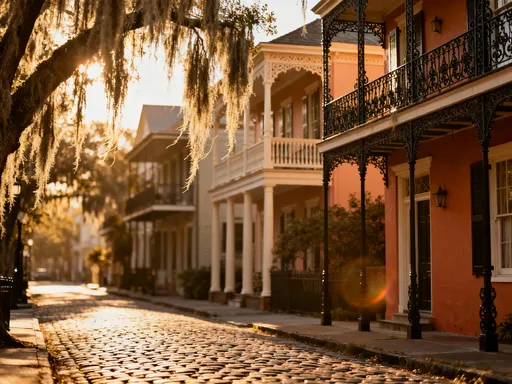
Walking through Savannah, I didn’t expect to fall head-over-heels for its architecture. But there I was, craning my neck at iron-laced balconies and pastel-hued mansions around every corner. It’s not just charm—it’s history whispering from brick and wrought iron. This city doesn’t just preserve the past; it wears it. And trust me, once you see how the sunlight hits those Spanish moss-draped facades, you’ll understand why this Southern gem is a living museum of design.
The Soul of Savannah: Where Architecture Tells Stories
Savannah’s architectural identity is rooted in its remarkable urban planning, a legacy that dates back to its founding in 1733 by General James Oglethorpe. Unlike many American cities that evolved haphazardly, Savannah was conceived with intention—a grid of streets punctuated by 22 public squares, each serving as a green oasis and community hub. These squares, originally designed for defense and civic life, now form the backbone of the city’s historic district, offering visitors a rhythmic, almost meditative journey through time. The city’s layout reflects a rare balance between order and organic growth, where Georgian symmetry meets Southern grace.
The architectural styles on display span centuries, yet coexist in harmonious dialogue. Georgian buildings, with their symmetrical facades, multi-paned windows, and brick construction, speak to Savannah’s colonial origins. Federal-style homes, popular in the early 1800s, introduce more delicate ornamentation—fanlights above doorways, slender columns, and refined cornices. As the city prospered in the antebellum era, Victorian influences emerged, bringing ornate woodwork, turrets, and steeply pitched roofs. Walking through neighborhoods like Monterey or Greene Square is like moving through a timeline where each block reveals a new chapter in American design history.
What sets Savannah apart is not merely the survival of these structures, but their integration into daily life. Residents still live in restored townhouses, children play in the same squares where soldiers once drilled, and cafes operate in former carriage houses. This continuity breathes authenticity into the city’s aesthetic. Unlike preserved historic towns that feel frozen or performative, Savannah lives and breathes within its architecture. The city’s commitment to maintaining this continuity has transformed its streets into an open-air archive—one that invites not just observation, but participation.
Hidden Details That Define the Districts
Beneath the grandeur of Savannah’s facades lies a world of subtle craftsmanship that rewards close attention. It’s in the curl of a wrought-iron scroll on a second-floor balcony, the unexpected pop of color from a crimson or cobalt front door, or the uneven glint of centuries-old cobblestones underfoot. These details, often overlooked by hurried tourists, are the quiet signatures of the city’s architectural soul. Each neighborhood within the historic district carries its own character, shaped by the era of its development and the tastes of its original inhabitants.
In the Monterey Square area, for example, the homes tend to be more imposing, with double-tiered verandas and neoclassical columns that reflect the wealth of 19th-century cotton merchants. The ironwork here is bolder, often featuring geometric patterns and substantial railings. Just a few blocks away, in the quieter Chippewa Square, the architecture leans toward intimacy—smaller homes with gabled roofs, dormer windows, and hand-carved wooden brackets. Doorways here might be framed by modest pediments or flanked by potted ferns, suggesting a more domestic, lived-in elegance.
Color, too, plays a symbolic role. While pastel hues—soft peach, mint green, lavender—are common, the choice of paint is rarely arbitrary. Many homeowners adhere to historically accurate palettes, guided by preservation standards that ensure visual harmony across the district. A bright yellow door might indicate a former inn or gathering place; a black-painted balcony could denote a house of mourning in the Victorian era. Even the materials tell stories: tabby concrete, made from crushed oyster shells, appears in some older walls, a reminder of coastal resourcefulness.
These nuances create a cityscape that feels cohesive yet richly varied. There’s no single “Savannah style,” but rather a layered aesthetic that evolves block by block. For the attentive traveler, this means every turn offers a new discovery—not just of beauty, but of intention. The city doesn’t shout its history; it murmurs it through details that only reveal themselves with patience and presence.
Why Preservation Matters: A City That Respects Its Past
Savannah’s architectural integrity is not accidental—it is the result of decades of dedicated preservation efforts that began long before historic conservation became a national priority. In the mid-20th century, as urban renewal projects swept across America, razing old neighborhoods for highways and high-rises, Savannah faced the same threat. The construction of a proposed overpass through the historic district sparked widespread concern, galvanizing local citizens to protect their city’s heritage. This moment marked the birth of a grassroots movement that would ultimately reshape Savannah’s future.
Among the key figures in this effort was Juliette Gordon Low, founder of the Girl Scouts, whose former home on Juliette Gordon Lane is now a National Historic Landmark. Though she passed before the mid-century preservation wave, her legacy of community engagement inspired later generations to act. More directly influential was the Historic Savannah Foundation, established in 1955—the first preservation organization of its kind in the South. Through advocacy, education, and direct property acquisition, the foundation saved dozens of endangered buildings from demolition, proving that preservation could be both practical and transformative.
Today, Savannah’s preservation success is codified in strict zoning laws and design guidelines enforced by the Historic District Board of Review. Any exterior alteration to a building within the historic district—whether replacing a roof, painting a door, or installing a new window—must be approved to ensure it aligns with the area’s architectural character. These regulations are not meant to stifle innovation, but to maintain continuity. The result is a city where new construction blends seamlessly with the old, where modern life unfolds without erasing the past.
What makes Savannah’s approach remarkable is its balance between authenticity and adaptability. Buildings are not treated as museum exhibits, but as living spaces. A former bank might become an art gallery; a 19th-century warehouse could house a boutique hotel. This philosophy of adaptive reuse ensures that history remains relevant, not just remembered. In doing so, Savannah offers a model for cities everywhere: preservation is not about stopping time, but about honoring it while moving forward.
Beyond the Postcard: Lesser-Known Architectural Gems
While Forsyth Park and the Mercer-Williams House draw the crowds, some of Savannah’s most compelling architecture lies off the beaten path, hidden in side streets and tucked behind live oaks. These quieter sites often escape guidebooks but offer a more intimate understanding of the city’s design evolution. One such example is the Isaiah Davenport House, a Federal-style residence on Columbia Square that showcases refined proportions and original interior woodwork. Though smaller than the grand mansions nearby, its precision and craftsmanship make it a masterclass in early 19th-century domestic architecture.
Equally evocative are the modest Creole cottages scattered throughout the district. Originating in the French Caribbean and adapted to Southern conditions, these one-story homes feature thick walls, steep roofs, and wide overhanging eaves designed to deflect heat and rain. Their compact footprints and central chimneys reflect a pragmatic approach to urban living, yet many are adorned with delicate iron railings or shuttered windows that add charm without excess. These cottages speak to Savannah’s diverse cultural influences and its ability to absorb and reinterpret external styles.
Religious architecture also reveals hidden artistry. St. John’s Church on Lafayette Square, though not as famous as the Cathedral of St. John the Baptist, features elegant Gothic Revival elements—pointed arches, stained glass, and a slender spire that rises gracefully above the treetops. Its interior, with vaulted ceilings and hand-carved pews, offers a sanctuary of quiet beauty. Similarly, the Independent Presbyterian Church, with its neoclassical portico and symmetrical layout, stands as a testament to the city’s colonial-era emphasis on order and civic virtue.
Perhaps most fascinating are the repurposed structures that now serve new functions. A former carriage house on Barnard Street, once used to store horse-drawn vehicles, now operates as a ceramic studio, its original brick walls and timber beams preserved as design features. Another, on East Taylor Street, has been converted into a coffee shop, where patrons sip lattes beneath exposed rafters and original skylights. These transformations demonstrate how historic buildings can remain vital in the modern economy, proving that preservation and progress are not mutually exclusive.
Design Meets Nature: How Landscaping Shapes the Experience
In Savannah, architecture does not stand in isolation—it is framed, softened, and elevated by nature. The city’s famed live oaks, some over 200 years old, arch over streets and squares, their massive limbs draped in cascading Spanish moss. This interplay between built and natural environments is not accidental; it is a deliberate part of Savannah’s design philosophy. The oaks were planted intentionally, not just for shade, but to create a sense of enclosure and rhythm, guiding the eye and slowing the pace of movement.
Gardens and green spaces are integral to the city’s aesthetic. Each square features a unique layout—some with fountains, others with statues or flower beds—but all emphasize balance and tranquility. Forsyth Park, the largest and most iconic, spans 30 acres and includes a formal garden, a walking path lined with oak trees, and a reflecting pool that mirrors the surrounding architecture. The careful placement of trees and plantings ensures that buildings are never fully exposed; instead, they emerge gradually, partially veiled by foliage, creating a sense of discovery with every step.
Seasonal changes further alter the experience. In spring, azaleas burst into bloom in pinks and reds, contrasting with the soft tones of stucco and brick. Summer brings a lush canopy that filters sunlight into dappled patterns on cobblestone streets. Autumn is subtler in the South, but the moss takes on a richer hue, and the air carries a crispness that enhances the clarity of architectural lines. Even in winter, when many trees are bare, the city retains its charm—the stark silhouettes of branches against historic facades create a graphic, almost monochromatic beauty.
This synergy between architecture and nature contributes to Savannah’s emotional impact. It’s not just the buildings that move visitors, but the way they exist within a living, breathing environment. The city feels protected, almost enchanted, as if time moves differently beneath the oaks. This intentional blending of design and landscape offers a powerful lesson: beauty is not just in the structure, but in its relationship to the world around it.
A Guide to Seeing More: How to Truly Observe Savannah’s Style
To fully appreciate Savannah’s architecture, one must slow down. The city rewards the mindful traveler—the one who walks instead of rides, looks up instead of ahead, and notices the small things. The best time to explore is early morning or late afternoon, when the sun casts long shadows and highlights textures in brick, iron, and wood. At these hours, the light enhances details: the grain of old timber, the patina of weathered metal, the subtle variations in paint that hint at layers of history.
Comfortable footwear is essential. Cobblestone streets, while picturesque, can be uneven and tiring. Low-heeled, supportive shoes with good grip will make the experience more enjoyable, especially when navigating squares with slight inclines or stepping over tree roots that have gently lifted sections of sidewalk. A light jacket or umbrella may also be wise, as Southern weather can shift quickly, and shade from the oaks, while welcome, can make mornings cooler than expected.
Photography is a powerful tool for deepening observation. Even without professional equipment, using a smartphone to capture details—close-ups of ironwork, patterns in brickwork, or the way light enters a transom window—encourages a slower, more intentional gaze. Later, reviewing these images can reveal elements missed in the moment. For those who enjoy sketching or journaling, bringing a small notebook can enhance mindfulness. Drawing a doorway or writing a few lines about a particular square helps anchor the experience in memory.
Guided walking tours, particularly those led by architects or preservationists, offer valuable context. Many focus specifically on design evolution, construction techniques, or neighborhood histories, providing insights that transform a casual stroll into an educational journey. Additionally, digital tools such as the Savannah Historic District map or the Historic Savannah Foundation’s self-guided tour app can help travelers navigate with purpose, highlighting architectural timelines and points of interest. These resources allow visitors to move beyond the surface, seeing not just what is beautiful, but why it matters.
Why This Matters: Architecture as Emotional Connection
Travel memories are often shaped by moments of connection—places that stir something deep within us. In Savannah, that connection frequently comes not from a single landmark, but from the cumulative effect of its architecture. The city doesn’t just impress with grandeur; it invites reflection. Walking its streets, one senses the lives that have unfolded within these walls—the conversations held on porches, the children who played in the squares, the hands that forged iron railings now softened by time. This emotional resonance is what makes preservation more than a technical endeavor; it is an act of empathy.
Architecture, at its best, is not just shelter—it is storytelling. The curves of a wrought-iron gate, the tilt of a weather vane, the choice of a doorway’s color—each decision reflects human values, aspirations, and identity. In Savannah, these stories are not locked away in archives; they are visible, tangible, and accessible. They remind us that cities are not just collections of buildings, but living records of who we have been and who we might become.
For the traveler, especially one navigating the rhythms of family, work, and daily responsibility, Savannah offers a rare gift: a space to pause and reconnect with beauty, history, and continuity. It speaks to the quiet longing many feel—for stability, for meaning, for places that endure. By preserving its architecture with care and purpose, Savannah shows us that the past need not be discarded to make room for the future. Instead, it can guide us, inspire us, and help us feel more rooted in an ever-changing world.
So the next time you walk through a city, look beyond the obvious. Notice the details. Ask what the buildings are saying. Because in places like Savannah, the walls don’t just stand—they speak. And if you listen closely, you might just hear your own story reflected in the echoes of history.