You Won’t Believe What I Saw at Pamukkale—This Place Is Unreal
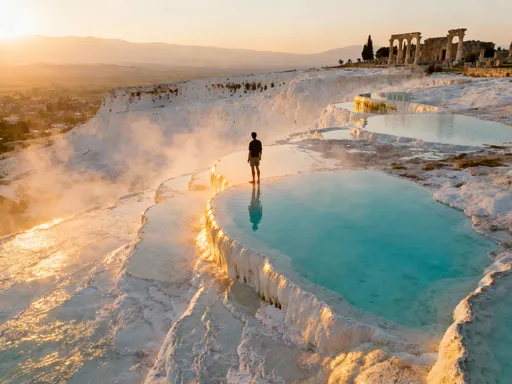
Standing atop the white terraces of Pamukkale, I felt like I’d stepped onto another planet. The sun glinted off the mineral-rich pools, each one a shimmering shade of turquoise. This isn’t just a destination—it’s a sensory journey. From the moment you walk barefoot on the warm travertine to catching sunrise over Hierapolis, every detail elevates the viewing experience. Nature, history, and light blend here in ways you have to see to believe. The air carries a quiet hush, broken only by soft splashes and distant laughter. Time slows. Colors shift with the sun. And for a few precious hours, the world feels untouched, serene, and profoundly beautiful. This is not scenery you merely photograph—it’s a place you absorb.
First Impressions: The Surreal Landscape of Pamukkale
Visitors to Pamukkale often describe their first sight of the terraces as dreamlike. Stretching across the hillside like frozen waterfalls, the brilliant white steps glisten under the Anatolian sun. Each terrace holds a shallow pool of water, its surface reflecting the sky in delicate shades of blue and green. The contrast between the chalky whiteness of the travertine and the vivid hues of the mineral pools creates a visual harmony rarely seen in nature. The landscape appears almost artificial—like a grand architectural project sculpted by human hands—yet it is entirely natural, formed over thousands of years by the steady flow of thermal waters.
The geological process behind this wonder is as fascinating as the view. Hot springs rich in dissolved calcium bicarbonate emerge from the earth deep beneath the plateau. As the water reaches the surface and flows down the slope, carbon dioxide escapes into the air, causing calcium carbonate to precipitate. Over time, this mineral builds up in layered deposits, creating the soft, porous limestone known as travertine. These deposits grow at a rate of approximately 5 millimeters per year, gradually forming the terraced pools that define Pamukkale. This slow, continuous formation has been ongoing for more than 400,000 years, crafting one of the most unique landscapes on Earth.
For many travelers, especially women between the ages of 30 and 55 who seek meaningful and restorative experiences, the emotional impact is immediate. There’s a sense of awe that transcends mere appreciation. Some describe feeling like children again, drawn instinctively to the water’s edge, eager to touch, walk, and immerse themselves in the moment. The warmth of the stone underfoot, the clarity of the water, and the sheer scale of the formation all contribute to a sensation of wonder. It’s not uncommon to hear soft exclamations of disbelief—“Is this real?”—spoken in hushed tones. Pamukkale doesn’t just impress; it transforms the way one sees nature’s capacity for beauty.
Best Times to Visit for Maximum Visual Impact
To fully appreciate Pamukkale’s visual magic, timing is essential. The quality of light dramatically affects how the pools appear, altering their color, depth, and reflective qualities. Early morning offers some of the most breathtaking views. As the sun rises behind the hills, its golden rays spread across the terraces, illuminating the water from within. The low angle of the sunlight enhances the turquoise tones, making them appear almost luminous. At this hour, the air is cool and still, often carrying a light mist that rises from the warm pools, adding a mystical quality to the scene.
Late afternoon presents a different but equally compelling spectacle. The sun, now lower in the western sky, casts long, soft shadows across the terraces. This directional light emphasizes the natural texture of the travertine, revealing ridges and contours that are less visible at midday. The white stone takes on warm, golden undertones, contrasting beautifully with the cool blues of the water. For photographers and those who appreciate subtle shifts in tone and contrast, this time of day offers exceptional opportunities for capturing the landscape’s depth and dimension.
Seasonal variations also play a significant role in the visual experience. Spring, particularly from March to May, is widely considered the ideal time to visit. Melting snow and seasonal rainfall ensure that the springs are flowing at full capacity, filling nearly every terrace with water. The pools are at their clearest and most vibrant, their colors intensified by the fresh flow of minerals. In contrast, summer months bring more tourists and higher temperatures, which can lead to partial evaporation and reduced water levels in some pools. While the skies are typically clear and bright, the midday sun can create harsh glare, making it more difficult to appreciate the delicate colors of the water.
For those seeking a more peaceful and visually rewarding experience, visiting during the shoulder hours—either early morning or late afternoon—is strongly recommended. These times not only offer superior lighting but also fewer crowds, allowing for uninterrupted contemplation and movement through the terraces. The combination of soft light, cooler temperatures, and relative solitude enhances both the aesthetic and emotional impact of the visit, making it a more personal and memorable experience.
Strategic Viewing Spots You Can’t Miss
To truly appreciate the full scope of Pamukkale’s beauty, one must explore it from multiple vantage points. Each perspective reveals a different facet of the landscape, offering new compositions and emotional resonances. The top terrace, known as the summit level, provides the most panoramic view. From this elevated position, visitors can see the entire cascade of pools stretching down the hillside, resembling a frozen river of white and blue. This is the ideal spot for taking in the grand scale of the formation and understanding its natural geometry. On clear days, the distant horizon blends with the sky, creating a sense of infinite space.
For a more immersive experience, walking through the mid-level terraces allows visitors to engage with the landscape on a sensory level. Here, the pools are shallower and warmer, inviting barefoot exploration. The sensation of the smooth, slightly spongy travertine underfoot, combined with the gentle ripple of water around the ankles, creates a deeply calming effect. At this level, the colors of the water appear more intense due to the proximity of the viewer. Sunlight filtering through the surface creates shifting patterns of light and shadow, revealing hidden depths and subtle variations in mineral concentration.
Another exceptional vantage point lies along the elevated pathways that run parallel to the terraces. These paths, designed to preserve the delicate formations while allowing access, offer bird’s-eye views that are particularly effective for photography. From this height, the symmetry and repetition of the terraces become more apparent, emphasizing the natural artistry of the site. The interplay between water, stone, and light is captured in a way that is difficult to appreciate from ground level.
One of the most unique perspectives comes from the ancient city of Hierapolis, which sits atop the hill overlooking the terraces. From the ruins of the agora, theater, or necropolis, visitors can see the natural wonder framed by columns, archways, and stone walls. This juxtaposition of human history and natural beauty adds a narrative depth to the visual experience. The ancient Greeks and Romans revered Pamukkale as a sacred healing site, and standing where they once stood allows modern visitors to connect with that legacy. A particularly striking view can be found near the Roman theater, where the curved seating area offers a natural amphitheater with the terraces as its backdrop—a perfect composition of culture and nature in harmony.
Walking the Terraces: How Movement Changes Your Perspective
One of the most distinctive aspects of visiting Pamukkale is the invitation to walk on the terraces themselves. Unlike many natural landmarks that are observed from a distance, Pamukkale encourages physical engagement. Visitors are permitted to walk barefoot on designated sections of the travertine, a practice that transforms passive observation into active participation. The sensation of the warm stone—often between 35°C and 38°C (95°F to 100°F)—underfoot is both surprising and soothing. This gentle heat, a remnant of the geothermal activity beneath the surface, adds a therapeutic dimension to the experience, making the walk feel as restorative as it is beautiful.
As one moves from terrace to terrace, the perception of color and depth shifts continuously. The water in each pool varies in clarity, mineral content, and depth, all of which influence how light is absorbed and reflected. In shallower pools, the white travertine floor is clearly visible, giving the water a bright, crystalline appearance. Deeper pools, where sunlight penetrates further, take on richer, more saturated hues of turquoise and aquamarine. Algae growth, naturally occurring and minimal, can also affect color, adding faint greenish tints that enhance the organic feel of the landscape.
Walking slowly through the terraces reveals details that are invisible from a distance. Tiny ripples created by footsteps spread outward in perfect circles. Sunlight glints off the surface in fleeting sparkles. The sound of water trickling over the edges of the terraces creates a soft, rhythmic background. These small, sensory details accumulate into a profound sense of presence. For many visitors, especially those who lead busy, fast-paced lives, this deliberate pace becomes a form of mindfulness. The act of walking mindfully—feeling the warmth, watching the light, listening to the water—becomes a meditative practice, grounding the individual in the present moment.
It is this combination of movement and perception that makes Pamukkale so transformative. The landscape is not static; it changes with every step. What appears as a flat, white surface from afar reveals itself as a dynamic, living formation up close. The experience teaches a simple but powerful lesson: true understanding comes not from observation alone, but from immersion. To see Pamukkale fully, one must walk it, feel it, and allow it to unfold gradually, like a story told in water and light.
Sunrise and Sunset: Nature’s Light Show
No visit to Pamukkale is complete without witnessing either sunrise or sunset—ideally both. These transitional moments of the day transform the terraces into living canvases of color and shadow. A sunrise visit begins in near silence, with the first light creeping over the eastern hills. As the sun rises, its golden rays spill across the terraces, gradually warming the stone and illuminating the pools from below. The contrast between the cool morning air and the warm travertine underfoot creates a unique sensory experience. Wisps of steam rise from the water, catching the early light and glowing like ethereal veils. The effect is both serene and dramatic, evoking a sense of renewal and quiet majesty.
Sunset offers a different kind of beauty. As the sun descends in the west, it bathes the terraces in warm, amber light. The white stone glows with a soft, honeyed tone, while the pools deepen into rich sapphire and emerald shades. Shadows lengthen across the hillside, adding depth and dimension to the landscape. The number of visitors typically decreases in the late afternoon, making sunset a more intimate and contemplative time to explore. The fading light encourages a slower pace, inviting reflection and stillness.
For those planning to experience either sunrise or sunset, a few practical considerations can enhance the visit. Arriving at least 30 minutes before the actual sunrise or sunset ensures a good viewing position and allows time to acclimate to the environment. Comfortable footwear is recommended for the walk to the terraces, though shoes must be removed before stepping onto the travertine. A light jacket or wrap is advisable, especially in the early morning or late evening when temperatures can drop significantly. While photography is a natural impulse, it’s worth remembering that sometimes the most meaningful moments are those experienced directly, without the lens of a camera. Simply standing and watching the light change can be a deeply moving experience.
Combining Nature and History: The Hierapolis Effect
Pamukkale’s magic is amplified by its historical context. Adjacent to the travertine terraces lies the ancient city of Hierapolis, a UNESCO World Heritage Site that dates back to the 2nd century BCE. Founded by the Attalid kings of Pergamon, the city was later developed by the Romans and became a renowned center for health and wellness. Its thermal springs were believed to possess healing properties, attracting visitors from across the ancient world. Today, the ruins of temples, baths, a grand theater, and an extensive necropolis stand as silent witnesses to this rich past, creating a powerful dialogue between nature and human civilization.
Walking through Hierapolis adds a narrative layer to the visual experience of Pamukkale. The contrast between the organic, flowing forms of the terraces and the geometric precision of the ancient architecture is striking. Columns rise beside cascading pools. Stone pathways lead from temples to viewpoints overlooking the white hills. The theater, with its well-preserved seating and stage, offers one of the most dramatic perspectives, where the audience once looked not at performers, but at the natural wonder beyond. For modern visitors, this blending of cultural and natural heritage deepens the emotional resonance of the site.
The site is well-maintained, with clear signage in multiple languages explaining the historical significance of key structures. Accessibility has been thoughtfully considered, with paved paths and designated viewing areas that accommodate a range of mobility levels. While some sections of the ruins are roped off for preservation, there is ample opportunity to explore and engage with the history. The on-site museum houses artifacts recovered from Hierapolis, including inscriptions, statues, and everyday objects, offering further insight into the lives of those who once lived and healed here.
For many visitors, especially those who value both beauty and meaning, the combination of Pamukkale and Hierapolis creates a holistic experience. It is not just about seeing a beautiful place, but about understanding its place in human history. The knowledge that people have come here for centuries to seek healing, peace, and renewal adds a timeless quality to the visit. In this way, Pamukkale becomes more than a destination—it becomes a bridge between past and present, nature and culture, the physical and the spiritual.
Travel Tips for an Uninterrupted Experience
To make the most of a visit to Pamukkale, a few practical guidelines can ensure a smooth and fulfilling experience. First and foremost, visitors should wear appropriate attire. Since walking on the terraces requires bare feet, it’s advisable to wear clothing that allows for easy removal of shoes—such as sandals or slip-ons. Many visitors choose to wear swimwear or light, quick-drying clothes, as contact with the water is both allowed and encouraged in designated areas. Carrying a small towel and a water bottle is also recommended, especially during warmer months.
Respecting the site’s preservation rules is essential. Certain areas are closed to the public to protect the fragile travertine from erosion. These restrictions are clearly marked, and visitors should adhere to them without exception. Littering is strictly prohibited, and all trash should be carried out. The water in the pools is part of a delicate natural system, and introducing foreign substances—such as sunscreen or lotions—can disrupt the mineral balance. For this reason, it’s best to apply skincare products well before entering the terraces or to use reef-safe, biodegradable options.
To avoid crowds, visiting on weekdays rather than weekends is highly advisable. Peak tourist season runs from June to August, when international visitors flood the site. For a quieter experience, consider visiting in the spring (April to May) or early autumn (September to October). Arriving early in the morning not only ensures better lighting but also allows for a more peaceful walk through the terraces before larger tour groups arrive. Some visitors opt to use less-traveled entrances or approach the site from the Hierapolis side, which can offer a more gradual and scenic introduction.
Finally, the most valuable tip is one of mindset. In a world of constant movement and digital distraction, Pamukkale invites slowness. It rewards those who take the time to pause, observe, and feel. True sightseeing is not about checking off landmarks or capturing the perfect photo. It is about presence—about allowing a place to speak to you in its own language of light, water, and silence. When approached with mindfulness, Pamukkale becomes more than a destination. It becomes a moment of clarity, a quiet reminder of nature’s enduring beauty, and a gift to the soul that lingers long after the journey ends.