You Won’t Believe These Secret Spots in Atami’s Hidden Shopping Scene
Nestled along the sparkling coast of Shizuoka, Atami is more than just a hot spring getaway—it’s a treasure trove of overlooked commercial charm. Most visitors stick to the main strip, but I dug deeper and uncovered a side of Atami where local life thrives in narrow alleys, vintage markets, and quiet arcades. These hidden commercial areas offer authentic flavors, unique finds, and a real sense of place. From family-run confectioneries to century-old bookshops tucked behind unassuming facades, Atami’s lesser-known shopping zones pulse with quiet resilience. If you’re tired of tourist traps and crave a deeper connection with a destination, you won’t believe what’s waiting just beyond the crowded promenades. This is where travel becomes meaningful—where every purchase tells a story, and every interaction feels genuine.
Why Atami’s Commercial Heart Beats Beyond the Main Street
Atami has long been celebrated as one of Japan’s most accessible seaside onsen towns, drawing visitors from Tokyo and beyond with its soothing mineral waters and scenic ocean views. Yet, for all its fame, much of the town’s true character lies hidden in plain sight—just steps away from the well-trodden paths. While tourists flock to the central shopping arcade near the south exit or ride the cable car up to the castle for panoramic vistas, a different rhythm plays out in the quieter corners of the city. These are the spaces where locals shop, chat, and sustain their daily routines, far removed from souvenir stalls and multilingual signage.
The distinction between tourist-facing commerce and authentic local economic life is subtle but significant. Main streets are designed for convenience and volume: standardized goods, predictable pricing, and curated experiences that prioritize comfort over discovery. In contrast, Atami’s off-the-radar commercial zones reflect organic growth—shops that have adapted over decades to serve evolving neighborhood needs. Here, store owners know their customers by name, products are often made in-house or sourced regionally, and time moves at a gentler pace. This isn’t staged authenticity; it’s lived reality.
Exploring these under-the-radar areas enriches the travel experience in ways that go beyond mere sightseeing. It allows visitors to witness how people actually live, work, and interact within the urban fabric. For thoughtful travelers—especially those seeking meaningful engagement over checklist tourism—these spaces offer a rare window into Japanese small-town resilience. By stepping off the main drag, you’re not just avoiding crowds; you’re participating in a more reciprocal form of tourism, one that values connection over consumption. And in an era where many regional towns face depopulation and economic decline, this kind of mindful exploration can make a tangible difference.
Atami Station North Exit: The Gateway to Hidden Commerce
If there’s a secret threshold into Atami’s authentic commercial soul, it’s the north exit of Atami Station. While most visitors instinctively head south toward the sea and the bustling main shopping street, the north side reveals a more grounded, everyday side of the city. This area doesn’t dazzle with neon or grand storefronts, but its quiet energy holds a kind of intimacy that’s increasingly rare in Japan’s tourist hubs. As trains arrive and commuters disperse, small shops come alive—convenience stores restock morning pastries, elderly residents stop by the tobacco stand, and students grab quick onigiri before school.
What makes this zone special is its dual role as both a transit hub and a neighborhood lifeline. Unlike the south exit, which feels engineered for foot traffic, the north exit functions primarily for residents. Here, you’ll find a mix of practical and personal businesses: a dry cleaner with faded signage that’s been in the same family for three generations, a modest eyeglass repair booth tucked beside the stairs, and a tiny bakery whose windows fog up by 8 a.m. with the heat of freshly baked melonpan. These aren’t novelty shops designed to impress visitors—they exist because people need them.
For travelers willing to linger, the north exit offers a masterclass in quiet urban observation. There’s a rhythm here that unfolds naturally: the old man who buys the same newspaper every day, the mother picking up bento boxes for her husband’s lunch, the local delivery rider who greets shopkeepers by name. It’s not performative; it’s community in motion. And because few tourists wander this way, shop owners are often genuinely curious about visitors who show interest in their wares. A simple “kore wa nan desu ka?” (What is this?) can lead to warm explanations, samples, or even invitations to return during seasonal festivals.
Walking through this area feels like slipping into the background of daily life, a privilege not often granted to outsiders. It’s not about buying something rare or photogenic—it’s about presence. The north exit doesn’t offer grand revelations, but rather small, cumulative moments of connection. For those who value authenticity over spectacle, this unassuming corner of Atami may become the most memorable part of their journey.
The Allure of Atami’s Covered Arcades: Sheltered Strolls with Soul
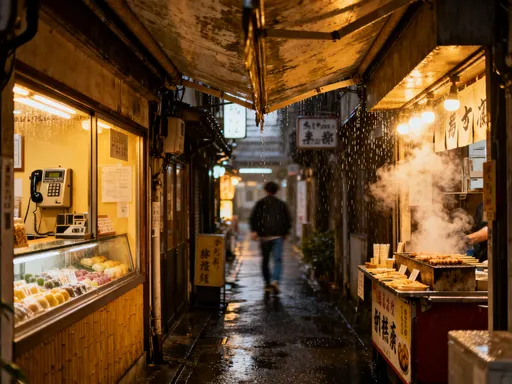
Just a short walk from the station, Atami reveals another layer of its commercial heart through a series of modest covered arcades. These sheltered walkways, often overlooked by guidebooks, are the kind of places where time seems to slow. Unlike the polished, air-conditioned shopping malls found in larger cities, these arcades are weathered and warm—literally and figuratively. Their corrugated glass roofs filter sunlight into soft patterns on the pavement, and the occasional creak of a door or ring of a cash register breaks the calm like punctuation in a quiet sentence.
One such arcade, nestled between residential streets and a municipal parking lot, houses a collection of family-run businesses that have endured for decades. There’s a traditional confectioner specializing in warabi mochi dusted with kinako, its wooden counter worn smooth by generations of hands. Nearby, a small tailor adjusts hems while chatting with a regular customer, and a phone repair shop displays hand-lettered signs listing services in both Japanese and simple English. These shops aren’t trying to be trendy—they’re simply doing what they’ve always done, adapting just enough to survive without losing their essence.
What stands out in these arcades is the absence of urgency. Shoppers don’t rush; they browse, converse, and sometimes just stand and watch the world pass by. An elderly couple might spend ten minutes choosing persimmons at the fruit stand, discussing ripeness with the vendor as if it were a matter of great importance. A young woman picks up a hand-knitted scarf, not because she needs it, but because her mother used to make similar ones. These moments aren’t staged for Instagram—they’re fragments of real life, unfolding in real time.
The sensory experience is equally grounding. The air carries a blend of steamed buns, old paper, and faint traces of rain on concrete. Stores display goods in ways that feel personal rather than strategic: jars of pickles lined up like museum pieces, handmade postcards clipped to strings overhead, secondhand books stacked in wobbly towers. There’s a humility to these spaces, a sense that commerce here is not about profit maximization but about continuity. In a world where shopping is increasingly digital and impersonal, these arcades remind us that transactions can still be human.
Motohakone Street: Where History Meets Low-Key Commerce
Extending northeast from central Atami, Motohakone Street offers a rare blend of historical continuity and quiet commercial life. This isn’t a destination marketed to tourists; there are no billboards, no souvenir emporiums, and no crowds. Instead, the street unfolds like a quiet narrative, with each shop adding a chapter to a story that stretches back over a century. Originally part of an old trade route connecting coastal towns with inland regions, Motohakone Street has evolved slowly, preserving its character even as the world around it changes.
Scattered along its length are antique shops that feel more like personal collections than retail spaces. One store, housed in a timber-framed building with sliding lattice doors, specializes in Meiji- and Taisho-era household items—porcelain dishes, copper kettles, and lacquered trays that still bear the patina of daily use. The owner, a soft-spoken man in his seventies, inherited the shop from his father and speaks with quiet pride about the provenance of each piece. He doesn’t push sales; he shares stories. Visitors who take the time to listen often leave not just with an object, but with a sense of connection to the past.
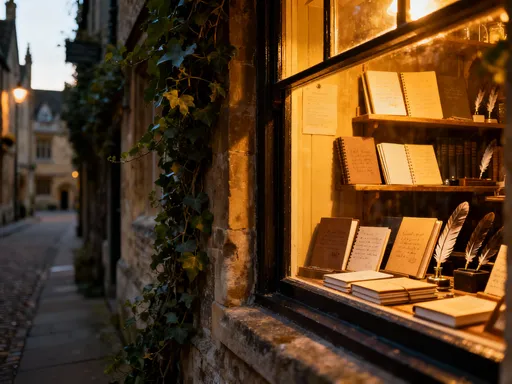
Another gem is a secondhand bookstore that occupies a narrow two-story building with a steep staircase and floorboards that creak underfoot. Its shelves are crammed with decades-old magazines, regional histories, and well-thumbed novels. The owner, a retired teacher, arranges books by mood rather than genre, and welcomes guests to sit and read. There’s no pressure to buy, only an invitation to linger. It’s the kind of place where you might discover a 1970s travel guide to Shizuoka or a handwritten diary tucked inside a poetry anthology—small treasures that feel like secrets passed between friends.
Further down the street, craft vendors sell handmade goods—washi paper goods, locally carved chopsticks, and indigo-dyed textiles—often produced in small batches or even one at a time. These artisans aren’t chasing viral fame; they’re sustaining traditions that matter to them. Their shops are unmarked by flashy signs or QR codes, relying instead on word of mouth and the loyalty of a few devoted customers. Walking Motohakone Street is less about shopping and more about witnessing resilience—the quiet persistence of small-scale commerce in an age of homogenization.
Offbeat Markets and Local Vending Culture
Beyond fixed storefronts, Atami’s commercial ecosystem includes a network of informal and automated retail experiences that reflect the ingenuity of small-town life. On weekend mornings, especially in spring and autumn, small farmers’ corners appear in residential neighborhoods—temporary setups where local growers sell fresh vegetables, citrus fruits, and homemade preserves. These aren’t full-fledged farmers’ markets, but rather humble stalls with hand-painted signs and baskets of produce arranged on folding tables. Payment is often handled through honor boxes, where customers leave cash in exchange for goods, trusting the system and each other.
These pop-up markets offer some of the most authentic culinary experiences in Atami. You might find daikon radishes still dusted with soil, yuzu harvested from backyard trees, or jars of pickled plum made using family recipes passed down for generations. The growers are happy to explain how their vegetables are grown without pesticides or to suggest ways to prepare the seasonal items. For visitors, it’s a chance to taste food at its most local and unprocessed—a direct link between land and table that’s increasingly rare in modern travel.
Equally telling is Atami’s vending machine culture, which goes far beyond the standard drinks and snacks. Throughout the town, especially in quieter districts, you’ll find specialized machines selling everything from fresh eggs and rice to umbrellas, socks, and even hot meals. Some are operated by local farmers, others by small businesses looking to extend their reach without staffing a full store. One machine near a residential hillside dispenses freshly grated wasabi root, a regional specialty, in small vacuum-sealed packs. Another, tucked beside a bus stop, offers handmade onigiri wrapped in nori, still warm from the morning preparation.
These automated shops are more than convenience—they’re a lifeline for communities where population decline has made traditional retail unsustainable. They allow older residents to access essentials without long trips, and they enable small producers to sell directly without high overhead. For travelers, they represent a fascinating intersection of tradition and innovation. In a country known for technological advancement, these machines aren’t cold or impersonal; they’re embedded with care. Each one feels like a quiet promise: someone thought about your needs, even if they never meet you face to face.
How to Navigate Atami’s Secret Commercial Zones Like a Local
Discovering Atami’s hidden commercial areas requires a shift in mindset more than a complex itinerary. The first step is simply choosing to wander—intentionally stepping away from the main tourist corridors and allowing yourself to get slightly lost. The best times to explore are weekday mornings, when local life is in full swing and shops are freshly stocked. Avoid holiday weekends and peak summer months if you want to experience the town’s quieter rhythm.
Start at Atami Station’s north exit and take a slow walk through the surrounding streets, paying attention to alleyways and side roads that branch off quietly. Use a simple paper map from the station’s information desk—digital maps often overlook small lanes and independent shops. If you prefer apps, regional platforms like Japan Travel by NAVITIME or local Shizuoka tourism guides can highlight lesser-known points of interest without oversaturating your experience.
Public transportation can also help you reach more remote commercial pockets. Local buses run frequently to residential areas where neighborhood shopping streets and farmers’ corners thrive. The No. 40 or No. 45 routes, for example, connect central Atami to outlying districts where daily life unfolds away from the coast. Riding these buses gives you a glimpse into commuter routines and access to communities that rarely see foreign visitors.
When shopping, a few etiquette basics go a long way. Always greet shop owners with a simple “irasshaimase” when entering, and don’t touch merchandise without permission. If you’re unsure about a product, a polite “sumimasen, kore wa?” (Excuse me, what is this?) is usually met with patient explanation. Cash is still preferred in many small shops, so carry yen in small denominations. Most importantly, move slowly and observe. Let the pace of the place guide you. These aren’t spaces to rush through; they’re meant to be absorbed.
Why These Hidden Commercial Areas Matter—And How to Support Them
Atami’s quiet shopping zones are more than just charming relics—they are vital threads in the fabric of a town navigating change. Like many regional Japanese cities, Atami faces challenges of aging populations, youth migration to urban centers, and the slow erosion of small businesses. Each family-run shop that closes represents not just an economic loss, but a rupture in community memory. The confectioner who remembers every customer’s favorite treat, the bookseller who curates titles with care, the farmer who grows yuzu without chemicals—these individuals are stewards of a way of life that cannot be replicated by chain stores or e-commerce.
Mindful tourism offers a quiet but powerful form of support. When you choose to buy a jar of handmade pickles from a local vendor instead of a mass-produced souvenir, you’re not just acquiring a memento—you’re contributing to someone’s livelihood. When you take time to learn a shopkeeper’s name or ask about their craft, you affirm the value of their work. These small acts accumulate, creating ripples that sustain communities in ways that are often invisible to outsiders.
Supporting these spaces doesn’t require grand gestures. It begins with presence—showing up, looking closely, and choosing to engage with authenticity over convenience. It means resisting the urge to treat every destination as a backdrop for photos, and instead approaching places with humility and curiosity. It means understanding that behind every product is a person, a history, and a hope that what they do matters.
Atami’s hidden commercial areas are not hidden because they want to exclude. They remain overlooked because the world moves too fast to notice them. But for those who slow down, who listen to the rhythm of a quiet street or the story behind a handcrafted item, these places offer something rare: a sense of belonging, even if only for a moment. They remind us that travel at its best isn’t about seeing more—it’s about seeing deeper. So the next time you visit Atami, don’t just soak in the hot springs. Walk the quiet streets, say hello to the shopkeeper, and let the town reveal itself, one small, meaningful connection at a time.