You Won’t Believe What I Ate in Istanbul
Istanbul isn’t just a bridge between continents—it’s a feast for the senses. Wandering its alleys, I stumbled upon kitchens where centuries-old recipes come alive in every bite. From sizzling street food to hidden rooftop mezes with a view of the Bosphorus, this city redefines dining. If you think Turkish cuisine is just kebabs, trust me—you’re in for a shock. Here’s how I uncovered its most unforgettable flavors.
The Soul of Istanbul Lies in Its Streets
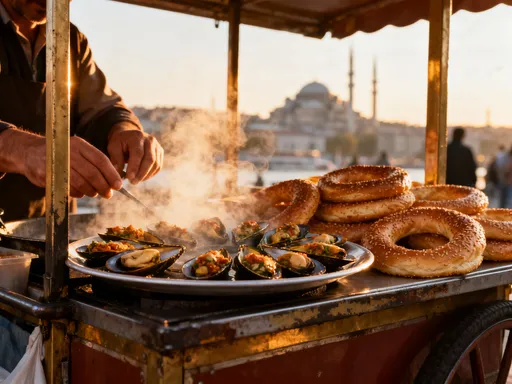
Istanbul’s heartbeat pulses strongest where the food does—in its winding side streets, ferry docks, and bustling markets. The city’s culinary soul isn’t confined to polished restaurants with linen tablecloths but thrives in the rhythm of daily life. Early mornings bring the warm, toasty scent of simit, the circular sesame bread baked in wood-fired ovens and sold from pushcarts on nearly every corner. Vendors call out to passersby, their baskets brimming with golden rings of bread that crackle when broken. This is not just a snack; it’s a ritual, a shared moment between neighbors, students, and workers grabbing a quick bite before the day unfolds.
Along the Galata docks, fishermen in weathered aprons hand over mussels stuffed with spiced rice—midye dolma—served cold with a generous squeeze of lemon. These humble street bites are wrapped in paper cones, eaten standing up, often with a view of the Bosphorus. Watching a local expert peel back the shell with practiced fingers, you realize this isn’t fast food in the modern sense. It’s slow tradition disguised as convenience. Each bite carries the taste of the sea, the tang of sumac, and the warmth of cumin, all balanced with a crunch of fresh parsley.
The markets, too, are living pantries. The Spice Bazaar isn’t just a tourist stop—it’s where grandmothers select saffron by scent and shopkeepers wrap bundles of dried mint and pul biber (Turkish red pepper flakes) in wax paper. The air hums with cardamom, cinnamon, and dried rose petals. Here, food isn’t separated from culture; it is culture. To walk through these alleys is to witness centuries of trade routes condensed into jars and baskets. And for the curious traveler, every stall offers an invitation to taste, to ask, to learn.
Breakfast Like No Other: A Ritual Worth Waking Up For
If dinner is a meal elsewhere, in Turkey, breakfast is the main event. In neighborhoods like Kadıköy on the Asian side or the leafy shores of Bebek, locals gather at sun-drenched cafés where breakfast spreads stretch across wooden tables like edible tapestries. This is not a rushed affair. It’s a celebration of flavor, texture, and time. A proper Turkish breakfast, or kahvaltı, can last two hours or more, unfolding in waves of small plates that invite conversation and lingering.
The centerpiece is often a trio of dairy delights: creamy beyaz peynir (a mild white cheese similar to feta), tulum (a tangy aged goat cheese), and the luxurious kaymak—thick, clotted cream drizzled with wildflower honey. Beside them, plump black and green olives glisten in olive oil, bright red tomatoes are sliced just before serving, and cucumbers offer a cool crunch. Homemade jams—fig, quince, sour cherry—sit in small jars, each spoonful bursting with the essence of sun-ripened fruit. Freshly baked pide, a soft, boat-shaped bread, arrives warm, perfect for tearing and dipping.
But what truly defines this experience is the atmosphere. Children laugh over glasses of fresh milk, elders sip çay (Turkish tea) from tulip-shaped glasses, and friends debate politics between bites of honey-drizzled cheese. There’s no pressure to leave, no check dropped at your elbow. The café becomes a living room, a meeting place, a sanctuary. For the visiting food lover, participating in this ritual is not just about eating—it’s about belonging, even if only for a morning. And when you finally rise from the table, you don’t feel full; you feel nourished in a deeper, more lasting way.
Beyond Kebabs: The Real Turkish Grill Experience
Kebabs may be Turkey’s most famous culinary export, but to limit the country’s grilling traditions to döner is to miss a world of depth and regional variety. In the quieter corners of Istanbul, tucked into historic stone buildings or nestled in the hills above the city, you’ll find restaurants where grilling is an art form passed down through generations. These are not places with English menus laminated in plastic, but family-run establishments where the scent of charcoal and slow-cooked meat draws you in like a magnet.
One of the most unforgettable dishes I encountered was testi kebabı, or “pot kebab.” Served in a sealed clay vessel that’s dramatically cracked open tableside, this dish reveals tender chunks of lamb, eggplant, tomatoes, and peppers that have steamed together for hours. The aroma that escapes is intoxicating—smoky, rich, and deeply spiced with paprika and thyme. It’s a meal rooted in Central Anatolia, where earthenware cooking has preserved flavors for centuries. Eating it feels like participating in a culinary ceremony, one that honors patience and tradition.
Then there’s şiş tavuk—marinated chicken skewers grilled over open flames. Unlike the fast-food version, this is made with boneless thighs rubbed in yogurt, garlic, and a blend of pul biber and cumin, then cooked slowly to retain juiciness. Served with grilled peppers and flatbread, it’s simple yet profound. In a centuries-old caravanserai-turned-restaurant in Sultanahmet, I watched cooks tend to copper-bottomed grills under flickering lamps, their movements precise and unhurried. This is where you understand that Turkish grilling is not about speed or spectacle, but about respect for ingredients and fire.
Regional differences also shine through. In the southeast, you’ll find spicier blends and more use of offal; along the Aegean coast, herbs like oregano and mint dominate. But across the board, the technique remains: low heat, long cooking, and minimal seasoning to let the meat speak for itself. For the traveler willing to venture beyond the tourist trail, these grills offer a taste of Turkey’s soul—one smoky, savory bite at a time.
Hidden Rooftop Dining with a View
As the sun begins to dip behind the domes of Hagia Sophia and the slender minarets of the Blue Mosque, a different kind of magic takes hold in Istanbul. In the old city, narrow staircases lead to rooftop terraces where candlelit tables await, offering panoramic views of the Golden Horn and the Bosphorus. These are not grand, formal restaurants with dress codes, but intimate spots known mostly to locals—places where the food is as memorable as the vista.
One evening, I followed a whisper from a shopkeeper in Çukurcuma and found myself climbing a weathered stone staircase to a tucked-away meyhanı, a traditional Turkish tavern. The air was cool, scented with jasmine and charcoal. A waiter handed me a chilled glass of rakı, Turkey’s anise-flavored spirit, which turned milky white when water was added. As the first stars appeared, small plates began to arrive: imam bayıldı, eggplant slow-cooked in olive oil and garlic until it melted on the tongue; cacık, a refreshing yogurt and cucumber dip flecked with dill; and garlicky shrimp sautéed in olive oil with a hint of chili.
The rhythm of the meal was unhurried. Each dish was meant to be savored with a sip of rakı, a bite of bread, and a pause to take in the view. Across the water, the lights of Üsküdar twinkled like scattered pearls. The conversation flowed, even between strangers, as is custom in a meyhanı. Music was absent, replaced by the distant hum of the city and the clink of glasses. This was not just dinner; it was an experience of connection—between people, place, and flavor.
Such spots are not found in guidebooks. They require timing, curiosity, and a willingness to wander. The best hours are just before sunset, when the light turns golden and the terraces begin to fill. Locals often arrive in pairs or small groups, ordering meze after meze, letting the evening stretch on. For the visitor, finding one of these hidden rooftops is like discovering a secret—a reminder that Istanbul’s greatest pleasures are often the quietest, the most personal.
Seafood by the Bosphorus: From Fisherfolk to Fine Plates
No culinary journey through Istanbul is complete without following the fish. The Bosphorus Strait, which divides the city between Europe and Asia, is more than a geographic marvel—it’s a living larder. Each morning, small wooden fishing boats return with their catch: silvery sardines, firm sea bass, plump mussels, and the prized hamsi, or Black Sea anchovies. These are not flown in from distant waters but pulled fresh from the currents that flow between continents.
In the village of Rumeli Hisarı, where the fortress of Mehmed the Conqueror looms over the strait, I found a cluster of wooden seafood shacks built right on the water’s edge. One, with peeling paint and a handwritten menu, served grilled levrek (sea bass) so fresh it needed only a squeeze of lemon and a drizzle of olive oil. I sat on a wobbly stool, the wind tousling my hair as a ferry passed in the distance. The fish was crisp on the outside, tender within, its flavor clean and oceanic. Beside me, a fisherman in a wool cap ate the same meal in silence, nodding in approval.
These lokantas—family-run eateries—are the backbone of Istanbul’s seafood culture. They operate on seasonality and availability, closing when the fish isn’t right. In winter, you’ll find hamsi fried in cornmeal or baked into savory pastries. In spring, mussels are at their peak, stuffed with rice and dill. Sustainability isn’t a buzzword here; it’s tradition. Generations of fisherfolk have followed the rhythms of the sea, knowing that overfishing disrupts not just supply, but heritage.
Dining at these waterfront spots is about simplicity and respect. There are no elaborate sauces or pretentious plating—just the fish, the view, and the moment. For the traveler, it’s a lesson in how food can be both humble and profound. And as you watch the sun set over the water, a plate of grilled fish in front of you, you understand that some of the best meals in Istanbul are not found in fine dining rooms, but on weathered docks where the sea still feeds the city.
Sweet Endings: The Art of Turkish Desserts
To end a meal in Istanbul is to enter a world of syrup, nuts, and delicate pastry. Turkish desserts are not an afterthought but a cornerstone of the culinary tradition—one that balances sweetness with texture, richness with restraint. Nowhere is this more evident than in the old patisseries near the Spice Bazaar, where golden trays of baklava are layered with precision, each sheet of phyllo paper brushed with butter and filled with crushed pistachios or walnuts.
The best baklava is made fresh daily, baked until crisp, then drenched in a fragrant syrup of sugar, lemon, and rosewater. When you take a bite, it shatters slightly, then melts on the tongue, the honeyed sweetness tempered by the earthiness of nuts. It’s a dessert that defies dieting but demands indulgence. And while it’s famous worldwide, tasting it in Istanbul—where the pistachios come from Gaziantep and the phyllo is hand-stretched—reveals a depth of flavor that packaged versions can’t match.
Then there’s lokum, or Turkish delight—soft, chewy cubes dusted with powdered sugar or crushed nuts. Flavors range from rose and lemon to pomegranate and cinnamon. In centuries-old shops, attendants offer samples on small plates, encouraging you to taste before you buy. These are not candies for children but sophisticated treats, often served with coffee or tea to guests as a gesture of hospitality.
But beyond the classics, Istanbul hides underrated gems. Kazandibi, a caramelized rice pudding with a dark, slightly smoky crust, offers a contrast of textures that surprises even seasoned dessert lovers. Sütlaç, baked rice pudding topped with cinnamon, is humble yet comforting, often enjoyed cold on a hot afternoon. And güllaç, a delicate milk-and-rosewater dessert layered with thin starch wafers, appears only during Ramadan but has begun to appear in specialty shops year-round. To explore these sweets is to taste centuries of Ottoman refinement, where sugar was once a luxury and dessert a symbol of generosity.
How to Eat Like a Local: Practical Tips for Food Exploration
Navigating Istanbul’s food scene can feel overwhelming, but with a few simple strategies, even first-time visitors can eat like seasoned locals. The key is to embrace the rhythm of the city rather than fight it. Meals in Istanbul unfold slowly, and the best experiences often come from spontaneity, not reservations. Start by using public transit—ferry rides aren’t just scenic but practical, connecting food-rich neighborhoods like Kadıköy, Üsküdar, and Beşiktaş. Locals rely on ferries, buses, and trams, and so should you. These routes lead to markets, bakeries, and meyhanes far from the tourist crowds.
When ordering, a few Turkish phrases go a long way. “Merhaba” (hello), “Teşekkür ederim” (thank you), and “Hesap lütfen” (the bill, please) open doors and warm smiles. Vendors appreciate the effort, even if your accent isn’t perfect. Don’t be afraid to point or gesture—many street food sellers don’t speak English, but a smile and a nod can bridge the gap. And when in doubt, follow the locals. If a queue has formed at a simit cart or a tiny lokanta, join it. Crowds are the best indicator of quality.
Timing matters. Breakfast spots fill by 9 a.m., meyhanes come alive after 7 p.m., and dessert shops are busiest in the late afternoon. Avoid eating at restaurants right next to major tourist sites—they’re often overpriced and underwhelming. Instead, walk a few blocks into residential areas, where families dine and prices are fair. Also, embrace cash. While cards are accepted in larger establishments, many small vendors and street carts operate on cash only.
Finally, eat with curiosity, not judgment. Try things that look unfamiliar—midye dolma, kokoreç (grilled lamb intestines), or even a glass of boza, a fermented grain drink. You don’t have to love everything, but approaching food with openness invites richer experiences. And remember: in Istanbul, sharing food is sharing life. A plate passed across the table, a bite offered with a smile—these are the moments that linger long after the meal ends.
Istanbul’s true magic isn’t just in its monuments—it’s on the plate. Each meal tells a story of empires, trade routes, and family tables passed down through generations. To taste this city is to understand it. So come hungry, stay curious, and let flavor guide your way.