You Won’t Believe What Antananarivo Hides in Its Hills
Antananarivo isn’t just Madagascar’s bustling capital—it’s a city where culture and nature collide in the most unexpected ways. Perched on red earth hills, it blends ancestral traditions with breathtaking landscapes most travelers never see. I went not for the usual tourist trail, but to feel the rhythm of daily life amid rice terraces, sacred forests, and winding highland paths. What I found was raw, real, and utterly captivating—proof that even in a city, Madagascar’s wild soul still beats strong.
The City on Twelve Hills
Antananarivo’s geography is unlike any other capital in the world. Built across a series of twelve prominent hills rising from the central highlands, the city’s very foundation is steeped in myth, history, and spiritual significance. These hills are not merely topographical features—they are ancestral landmarks, each associated with different clans and royal lineages from the Merina Kingdom, which once ruled much of Madagascar. The city’s layout follows the natural contours of the land, with neighborhoods sprawling along ridges and valleys, connected by steep roads and narrow footpaths that wind like veins through the urban fabric.
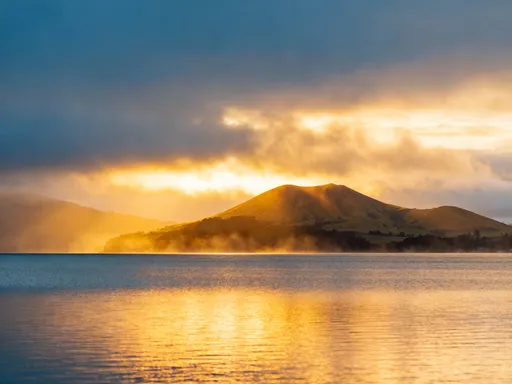
The elevation of Antananarivo, sitting at approximately 1,280 meters above sea level, creates a temperate highland climate distinct from the tropical heat found along the coast. Mornings often begin with a soft mist clinging to the hillsides, gradually lifting to reveal panoramic views of terraced slopes, tiled rooftops, and distant mountain ranges. This varied topography also fosters microclimates within the city—cooler on the peaks, warmer in the lower basins—making it possible to experience shifting weather patterns within just a few kilometers. These conditions have long supported agriculture, particularly rice cultivation, which remains integral to both the economy and cultural identity of the region.
Historically, the twelve hills were fortified and used as royal citadels, with the most famous being Analamanga, where King Andrianjaka established the first Rova (royal palace) in the early 17th century. Though much of the original structure was destroyed by fire in 1995, the site—now home to the Ambohimanoro Cathedral and remnants of the palace walls—remains a powerful symbol of national heritage. The reverence for these hills persists today, with many locals observing traditional customs and taboos (known as *fady*) related to the land. This deep-rooted connection between people and place shapes how the city grows, ensuring that even amid modern development, the natural landscape is not erased but respected.
Ambohimanga: Where Nature Meets Sacred Tradition
Just a short journey northeast of the capital lies Ambohimanga, a UNESCO World Heritage Site and one of Madagascar’s most spiritually significant locations. More than just a historic village, it is a living testament to the harmony between nature and ancestral belief. Nestled atop a forested hill, Ambohimanga served as a royal retreat and spiritual center for the Merina monarchy. Today, it remains a place of pilgrimage, where visitors walk along ancient stone pathways flanked by towering endemic trees, their roots entwined with centuries of tradition.
The site includes the restored royal compound, complete with wooden palaces, sacred tombs, and ceremonial baths, all enclosed within a fortified wall. But what makes Ambohimanga truly remarkable is the preserved forest that surrounds it—a rare example of primary vegetation in a country where deforestation has taken a heavy toll. The forest is not just scenic; it is considered sacred. Certain trees, such as the *Avoha* and *Tambourissa*, are protected by *fady*, or cultural taboos, that prohibit cutting or disturbing them. These taboos are not mere superstitions—they are traditional conservation practices that have helped maintain biodiversity for generations.
Walking through Ambohimanga, one senses a quiet reverence. Guides often speak in hushed tones, reminding visitors to respect local customs: removing shoes before entering sacred spaces, avoiding loud noises, and refraining from pointing at tombs. Ritual offerings—such as strips of cloth tied to branches or small piles of rice—are still left at shrines, maintaining a continuous spiritual dialogue between the living and the ancestors. This deep interweaving of nature, history, and belief illustrates how cultural values can serve as powerful tools for environmental protection, long before modern conservation movements emerged.
Rice Terraces in the City? Yes, It’s Real
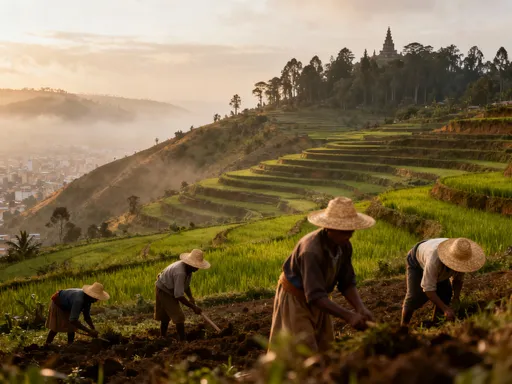
One of the most surprising discoveries in Antananarivo is the presence of active rice paddies nestled within the urban outskirts. In neighborhoods like Andoharanofotsy and Anosy, terraced fields cascade down hillsides, their flooded surfaces reflecting the sky like scattered mirrors. These are not abandoned plots or decorative landscapes—they are working farms, tended daily by local families using methods passed down through generations. Women bend at the waist to plant seedlings by hand, while men guide zebu oxen through muddy fields, plowing with wooden plows just as their ancestors did centuries ago.
Rice is more than a staple food in Madagascar—it is central to identity, ritual, and social life. The Malagasy phrase *“vita ety Madagasikara, manda ety Madagasikara”*—“born in Madagascar, fed by rice”—captures its deep cultural significance. Most households consume rice at every meal, and it plays a role in ceremonies from births to funerals. In Antananarivo, the persistence of rice farming within the city limits speaks to both necessity and tradition. Despite rapid urbanization, many residents maintain strong ties to the land, viewing agriculture not as a rural occupation but as a way of life that transcends geography.
The terraces themselves are engineering marvels, carved into steep slopes with precision to retain water and prevent erosion. Irrigation channels, often hand-dug, direct water from highland streams down through the fields in a carefully managed system. These micro-farming systems contribute to local food security and help regulate the city’s water cycle, reducing runoff during heavy rains. While urban expansion threatens some of these areas, community-led initiatives are working to preserve them, recognizing that the loss of rice fields would mean more than just a decline in production—it would be a rupture in cultural continuity.
Lemurs in the City’s Backyard
Just beyond the bustling streets of Antananarivo, pockets of green serve as refuges for Madagascar’s unique wildlife. Tsimbazaza Park, located on a hillside in the southern part of the city, is one such sanctuary. Originally established as a botanical garden and zoo, it has evolved into a conservation and education center dedicated to protecting endemic species. Here, visitors can observe lemurs—some rescued from illegal pet trade or deforestation—living in semi-natural enclosures that mimic their forest habitats.
Among the residents are ring-tailed lemurs, red-fronted brown lemurs, and the rare greater bamboo lemur, one of the most endangered primates in the world. The park also houses a small natural history museum and an arboretum featuring over 300 species of native plants, many of which are used in traditional medicine. While Tsimbazaza is not a wild reserve, its role in public awareness is invaluable. Schoolchildren from across the capital visit on field trips, learning about biodiversity and the importance of protecting Madagascar’s natural heritage. For many urban dwellers, this may be their only chance to see lemurs up close, fostering a sense of pride and responsibility toward conservation.
Outside the park, smaller green spaces and remnant forest patches also support wildlife. In areas like the Anjozorobe-Angavo forest corridor, just a short drive from the city, guided hikes offer opportunities to spot nocturnal species such as mouse lemurs and sportive lemurs in their natural environment. These excursions are often led by local guides trained in eco-tourism, ensuring that visits are low-impact and beneficial to surrounding communities. The presence of wildlife so close to a growing capital city is a reminder that nature and urban life need not be mutually exclusive—when protected and respected, they can coexist in balance.
Walking the Trails Above the Capital
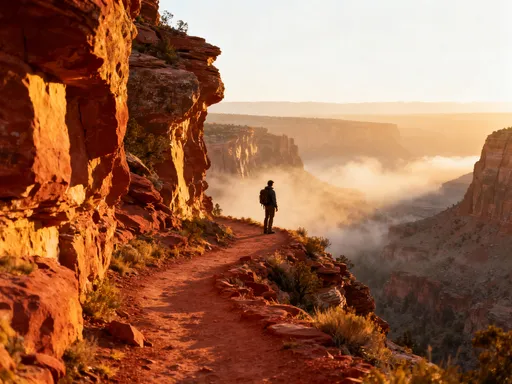
For those seeking a deeper connection with Antananarivo’s landscape, hiking the lesser-known trails above the city offers an immersive experience. One of the most rewarding routes leads through Andoharanofotsy, a neighborhood where paved roads give way to dirt paths that climb through eucalyptus groves and open meadows. At dawn, the hills are often shrouded in mist, with sunlight slowly spilling over the ridges, illuminating the patchwork of rice fields below. The air is crisp, carrying the scent of damp earth and wild herbs, and the only sounds are birdsong and the distant call to prayer from a neighborhood mosque.
These trails are not tourist attractions—they are part of daily life for many residents. Students walk to school along these paths, elders gather firewood, and farmers tend their plots, pausing to exchange greetings with passersby. Walking alongside them, one gains insight into the rhythms of highland life: the importance of community, the reliance on the land, and the quiet resilience of those who live close to nature. Along the way, small shrines and ancestral markers dot the landscape, silent reminders of the spiritual presence that permeates the hills.
From the higher vantage points, the full expanse of Antananarivo unfolds—a city both chaotic and beautiful, where red rooftops blend with green slopes and distant peaks fade into the horizon. These views are not just scenic; they offer perspective. They reveal how the city has grown not in defiance of the land, but in dialogue with it. Each hill, each valley, each cultivated field tells a story of adaptation, survival, and continuity. For visitors, walking these paths is not merely exercise—it is a form of listening, a way to understand the soul of a place through its terrain.
Markets, Crafts, and the Pulse of Daily Life
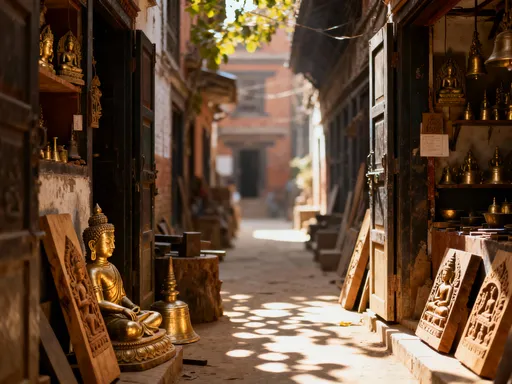
No visit to Antananarivo is complete without exploring its markets, where the city’s cultural and natural threads come together in vibrant display. The bustling Analakely market, located in the heart of the city, is a sensory overload of colors, sounds, and scents. Vendors sell everything from fresh produce and spices to handwoven textiles and carved wooden masks. But beyond the commerce lies a deeper narrative—one of craftsmanship rooted in the environment.
Many of the goods on sale are made from natural materials sourced sustainably from the surrounding region. Raffia, harvested from palm leaves, is woven into baskets, hats, and mats—items used in daily life and ceremonial settings alike. Artisans shape wood from fast-growing eucalyptus and pine into intricate furniture and decorative carvings, while others create recycled paper from the fibers of the *avoha* plant, transforming it into notebooks, cards, and art. These crafts are not just economic activities; they are expressions of identity, blending utility with symbolism.
Conversations with artisans reveal a deep respect for tradition. Many learned their skills from parents or grandparents, and they take pride in preserving techniques that might otherwise be lost. Some have adapted to modern demand by incorporating eco-friendly practices, such as using non-toxic dyes or minimizing waste. Others collaborate with cooperatives that ensure fair wages and access to international markets. Supporting these crafts is not only a way to bring home a meaningful souvenir—it is a way to contribute to sustainable development and cultural preservation in a city navigating the challenges of growth.
Why This City Changes How You See “Urban” Travel
Antananarivo challenges the conventional idea of what a capital city should be. It does not conform to the image of a concrete jungle or a sleek metropolis of glass towers. Instead, it embodies a different kind of urbanism—one where nature is not pushed aside but woven into the fabric of daily life. Here, city dwellers live alongside rice fields, hike ancestral trails, and honor sacred forests, proving that modernity and tradition can coexist without erasing the past.
This balance is not without its challenges. Rapid population growth, traffic congestion, and infrastructure limitations place pressure on the city’s resources. Yet, even amid these struggles, Antananarivo retains a sense of harmony. The persistence of green spaces, the reverence for ancestral sites, and the continuation of traditional agriculture all reflect a collective commitment to preserving what matters. For travelers, this offers a rare opportunity: to experience a city not as a destination of convenience, but as a living cultural landscape shaped by history, belief, and the natural world.
Visiting Antananarivo with respect and intention can be transformative. Travelers are encouraged to engage with local guides, who provide context and ensure cultural sensitivity. The best times to visit are during the dry season, from April to October, when the weather is mild and the trails are accessible. Early mornings offer the most serene experiences, whether watching farmers in the fields or walking through mist-covered hills. By choosing low-impact activities—such as guided hikes, visits to community-run parks, or shopping at artisan cooperatives—visitors can support sustainable tourism that benefits both people and the environment.
Antananarivo teaches us that even in urban spaces, culture and nature aren’t separate—they’re woven together. From sacred hills to living terraces, the capital reveals Madagascar’s soul not in isolation, but in harmony with people and place. To visit is not just to see, but to understand a way of life where every hill, tree, and path has a story.