You Won’t Believe These Hidden Art Gems in Prague
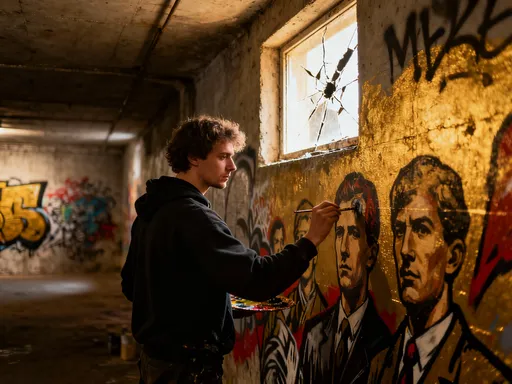
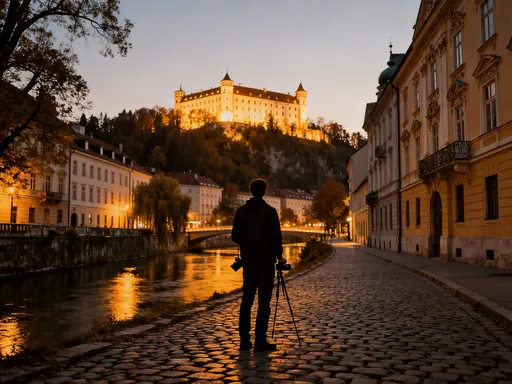
Prague isn’t just castles and cobblestones — it’s a living canvas. I didn’t expect to find so many underground galleries, repurposed factories, and intimate studios tucked behind medieval facades. From bold street murals to avant-garde exhibitions, the city’s art spaces blend history with rebellion. This is culture not in museums, but in motion — raw, real, and impossible to ignore. Beyond the spires of Prague Castle and the echoes of the Charles Bridge, a quieter but equally powerful revolution is unfolding: one painted on cracked walls, staged in forgotten courtyards, and whispered in converted lofts. For travelers willing to step off the beaten path, the city reveals itself not through postcards, but through the pulse of its independent art scene.
The Soul of Prague’s Art Scene: Where Culture Lives Beyond the Tourist Trail
Prague’s artistic identity cannot be separated from its layered past. For centuries, the city stood at the crossroads of empires, ideologies, and revolutions. Under Habsburg rule, art was often grand, religious, and tightly controlled — a reflection of imperial power. Later, during the communist era, creative expression was suppressed, with only state-approved themes allowed in public spaces. Yet, it was precisely under these constraints that art became a form of quiet resistance. Dissident artists used symbolism, satire, and abstraction to critique authority, often exhibiting their work in private apartments or underground venues where surveillance was harder to maintain.
The Velvet Revolution of 1989 marked a turning point. With the fall of the regime, artists gained unprecedented freedom. No longer bound by ideological mandates, they began to explore personal narratives, experimental forms, and global influences. This shift laid the foundation for today’s vibrant, decentralized art scene — one that thrives not in grand institutions alone, but in the margins, alleys, and repurposed spaces of the city. The legacy of resistance lives on, not as nostalgia, but as a living ethos: art as truth-telling, as community-building, as a way of reclaiming public space.
To truly understand this spirit, one must move beyond the historic center. Neighborhoods like Žižkov, Holešovice, and Karlín — once industrial or working-class districts — now pulse with creative energy. These areas were never fully polished for tourism, and that’s precisely their strength. Here, galleries operate out of basements, murals bloom on the sides of laundromats, and performance art spills into tram stops. The art is not curated for outsiders; it speaks to locals, to history, to the present moment. It is in these overlooked corners that visitors encounter the authentic soul of Prague — not as a museum piece, but as a city constantly reimagining itself.
DOX Centre for Contemporary Art: Bold Ideas in a Reimagined Space
Nestled in the Holešovice district, the DOX Centre for Contemporary Art stands as a powerful symbol of Prague’s artistic evolution. Housed in a renovated factory building, DOX embodies the transformation of industrial decay into cultural vitality. The architecture itself tells a story — exposed brick, steel beams, and large glass additions create a dialogue between the old and the new. This fusion reflects the center’s mission: to challenge conventions, provoke thought, and serve as a platform for ideas that matter.
DOX is not a traditional museum. It does not collect art for preservation, nor does it focus on historical retrospectives. Instead, it curates exhibitions that engage with pressing global issues — from climate change and migration to surveillance and democracy. Past exhibitions have included works by international artists who use technology, installation, and performance to question power structures. One notable project explored the impact of artificial intelligence on human identity, featuring interactive displays that responded to visitors’ movements and choices. Another addressed the refugee crisis through multimedia storytelling, combining photography, audio recordings, and personal artifacts.
What sets DOX apart is its commitment to dialogue. Alongside exhibitions, the center hosts lectures, film screenings, and workshops that invite public participation. Visitors are encouraged not just to observe, but to reflect, debate, and contribute. The on-site café and rooftop terrace further enhance this sense of community, offering spaces where conversations continue long after the gallery doors close. For families, couples, or solo travelers seeking depth, DOX offers an experience that is intellectually enriching and emotionally resonant. It proves that art, at its best, is not passive — it demands engagement.
Meet the Makers: Artist Studios You Can Actually Visit
One of the most intimate ways to connect with Prague’s art scene is by stepping into the spaces where creativity happens — the artist studios themselves. Unlike the curated distance of a museum, these personal workspaces offer raw, unfiltered glimpses into the artistic process. Paint-splattered floors, half-finished canvases, and shelves lined with tools and sketches tell stories no placard ever could. Fortunately, Prague makes such access possible through initiatives like *Ateliéry otevřené dveře* (Open Door Studios), an annual event that invites the public into hundreds of private studios across the city.
During this weekend-long celebration, artists open their doors in neighborhoods like Karlín, Vysočany, and Smíchov. Some work in shared complexes, where former warehouses now house dozens of creators. Others maintain solitary studios in quiet residential buildings. Visitors can watch a sculptor shape clay, listen to a multimedia artist explain her digital collages, or sip tea while a painter discusses her inspiration from Bohemian folklore. These encounters are not performances — they are real moments of exchange, where curiosity is welcomed and questions are encouraged.
The value of these visits extends beyond appreciation. They foster connection. Speaking with an artist about her struggles, her influences, her hopes, transforms abstract art into human experience. For many travelers, especially those in their 30s to 50s who value meaning and authenticity, this kind of interaction leaves a lasting impression. It reminds us that culture is not static — it is made daily by individuals who choose to create, even when it’s difficult. By supporting these artists — whether through conversation, purchasing a small print, or simply showing up — visitors become part of the ecosystem that sustains Prague’s creative spirit.
Street Art as Storytelling: From Banksy-Style Murals to Local Messages
While galleries and studios offer depth, Prague’s streets provide immediacy. The city’s street art scene is not merely decorative; it is a dynamic form of storytelling. Along the banks of the Vltava River, near the Letná embankment, stretches a long wall reminiscent of Berlin’s East Side Gallery. Covered in rotating murals, this open-air canvas features works by Czech and international artists addressing themes like freedom, memory, and social justice. One piece depicts a child holding a key, symbolizing hope for a future unburdened by history. Another uses stenciled faces to honor victims of political oppression.
In districts like Smíchov and Karlin, street art appears more spontaneously — on shuttered storefronts, utility boxes, and alleyway corners. These works often carry local references, humor, or critiques of urban life. A mural in Karlin shows a cat wearing a tiny crown, a playful nod to the neighborhood’s nickname as Prague’s “cat district.” Elsewhere, a satirical piece portrays a bureaucrat made entirely of paperwork, a wry comment on red tape. While some of these creations are temporary, destined to be painted over or weathered away, their impermanence is part of their power. They exist in the moment, speaking directly to those who pass by.
Perhaps the most famous example is the John Lennon Wall, located near the Malá Strana quarter. Since the 1980s, this wall has been covered in messages of peace, love, and protest, inspired by the Beatles’ legacy and the spirit of youth rebellion. Though constantly repainted by authorities, it is just as quickly reclaimed by locals and visitors alike. It is not a monument, but a living document — one that changes with the times, yet always returns to its core message: that art can be a voice for change. For families walking together or individuals reflecting on their journey, the Lennon Wall offers a poignant reminder that creativity and courage often go hand in hand.
Forgotten Spaces Turned Creative Havens: The Rise of Alternative Art Venues
Prague’s transformation of abandoned spaces into cultural hubs is one of its most inspiring trends. Across the city, neglected buildings are being reclaimed by artists, designers, and collectives who see potential where others see decay. One of the most striking examples is Krátká Street, a narrow lane in the city center that has become a microcosm of underground creativity. What appears from the outside as an ordinary passage opens into a network of small theaters, experimental galleries, and design studios. Performances here range from avant-garde dance to political satire, often staged with minimal sets and maximum emotional impact.
Another notable space is Kultery, located in a former industrial complex. This multidisciplinary venue hosts everything from photography exhibitions to craft markets and live music. Its raw aesthetic — concrete floors, exposed pipes, natural light filtering through high windows — enhances the authenticity of the experience. Similarly, the Manes Exhibition Hall, situated on the banks of the Vltava, has long served as a platform for cutting-edge Czech and international art. Though more established than some grassroots spaces, Manes maintains a commitment to innovation, often featuring works that challenge traditional boundaries.
These alternative venues share a common ethos: they are community-driven, low-budget, and open to risk. They do not rely on government funding or corporate sponsorship, but on the passion of those who run them. This DIY spirit fosters a sense of ownership and belonging. Artists are not just exhibitors — they are curators, organizers, and volunteers. Visitors, in turn, are not passive consumers, but participants in a shared cultural project. For women traveling with friends or seeking meaningful experiences, these spaces offer a refreshing contrast to commercialized tourism. They feel real, alive, and deeply human.
Navigating the Scene: Practical Tips for Exploring Prague’s Art Spaces
Exploring Prague’s hidden art gems requires a shift in mindset — from ticking off landmarks to wandering with intention. The good news is that many of these spaces are accessible, affordable, and well-connected by public transportation. The city’s metro, tram, and bus systems are efficient and easy to navigate, with signs in both Czech and English. A day pass costs less than ten euros and allows unlimited travel, making it simple to hop between districts like Holešovice, Karlín, and Žižkov.
Timing is key. One of the best ways to experience the art scene is by attending the monthly *First Friday* events, held on the first Friday of each month in various neighborhoods. Galleries, studios, and alternative spaces open their doors for evening viewings, often accompanied by live music, wine, and artist talks. These events create a festival-like atmosphere, drawing locals and visitors alike. Checking online listings in advance can help plan an itinerary. Websites like *Inkognita* and *Prague Now* provide up-to-date information on exhibitions, openings, and cultural happenings.
When visiting studios or smaller venues, it’s important to remember that many are working spaces, not tourist attractions. A respectful approach goes a long way — speaking quietly, asking before taking photos, and engaging artists with genuine interest. Many creators appreciate thoughtful questions and are happy to share their process. Supporting them directly — by purchasing a small artwork, a print, or a handmade book — makes a tangible difference. Pairing art visits with stops at local cafes or parks can also enrich the experience. A coffee after a gallery tour, or a walk along the river, allows time to reflect and absorb what has been seen.
Why This Journey Matters: Art as a Gateway to True Cultural Connection
In an age of fast travel and curated Instagram moments, visiting Prague’s independent art spaces offers something rare: depth. These experiences do not yield perfect photos, but they leave deeper impressions. They invite travelers to slow down, to listen, to see a city not as a collection of sights, but as a living, breathing community. Art becomes a bridge — between past and present, between visitor and local, between observer and participant.
For women in their 30s to 55s — many of whom travel not just for leisure, but for growth, connection, and inspiration — this kind of journey holds special meaning. It speaks to a desire for authenticity, for stories that matter, for experiences that linger. Engaging with Prague’s art scene is not about becoming an expert, but about opening oneself to new perspectives. It is about recognizing that culture is not something to be consumed, but something to be felt, questioned, and shared.
Ultimately, these hidden gems remind us that every city has layers. Beneath the postcard views of Prague lies a dynamic, evolving soul — one expressed in brushstrokes, murals, installations, and quiet conversations. To discover it is to move beyond sightseeing and into understanding. So take the side street, climb the unmarked staircase, knock on the studio door. Let curiosity be your guide. Because in the end, the most memorable travels are not those that show us the world, but those that help us see it anew.