You Won’t Believe These Secret London Viewpoints I Found
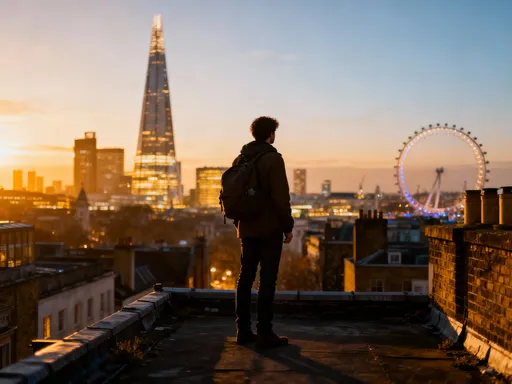
Ever thought you’ve seen all of London from above? Think again. Hidden behind ordinary streets and quiet corners are breathtaking viewpoints most tourists—and even locals—overlook. I stumbled upon these spots by chance, and honestly, they changed how I see the city. From quiet rooftop escapes to unexpected elevated walks, these perspectives reveal London’s true magic. Let me take you on a journey to the city’s best-kept secrets. These are not the crowded observation decks or ticketed towers, but authentic, often free vantage points where the skyline unfolds in silence, beauty, and surprise. This is London as it’s meant to be seen—intimate, layered, and alive.
The Allure of Seeing London from Above
London reveals its soul when seen from above. At ground level, the city feels like a constant hum of movement—buses weaving through traffic, pedestrians rushing down pavements, and the occasional chime of bicycle bells cutting through the noise. But rise just a few stories, and the rhythm shifts. The chaos resolves into patterns. Streets become ribbons, parks turn into green mosaics, and the Thames glimmers like a silver thread winding through history. Elevated views offer more than just scenery—they provide understanding. From height, you can trace the arc of the city’s growth, from medieval alleys to modern glass towers, and appreciate how old and new coexist in delicate balance.
There’s a psychological shift that happens when you gain perspective. Problems seem smaller. Decisions feel clearer. Standing above the city, even for a few quiet minutes, can be a form of mental reset. Studies in environmental psychology suggest that exposure to expansive views reduces stress and enhances cognitive flexibility. In London, where daily life can feel fast and fragmented, these moments of elevation offer rare clarity. Whether you’re a visitor or a long-time resident, seeing the city from above renews your sense of wonder and connection.
What makes London’s skyline particularly captivating is its lack of uniformity. Unlike cities built on grids with predictable skylines, London’s architecture is a patchwork of centuries. One moment you’re looking at the gothic spire of St. Pancras, the next at the futuristic curves of The Gherkin. The Shard pierces the clouds while the dome of St. Paul’s holds its ground with quiet dignity. From above, these contrasts don’t compete—they harmonize. This visual storytelling is best appreciated from vantage points that allow you to take it all in, not just in snapshots, but in full, sweeping panoramas.
A Local’s Approach to Finding Hidden Perspectives
Finding London’s secret viewpoints isn’t about following a checklist—it’s about cultivating a mindset. The most memorable discoveries happen when you slow down, observe closely, and allow curiosity to lead. Tourists often rush from landmark to landmark, guided by apps and itineraries. But locals know that some of the best experiences come from wandering without a destination. It’s in these unplanned moments—turning down a side street, climbing a flight of public stairs, or pausing to admire a building’s façade—that hidden views reveal themselves.
One of the most effective strategies is to talk to people. Baristas, shopkeepers, and even fellow walkers often know of quiet spots that don’t appear on maps. A simple question—“Where do you go to get a good view of the city?”—can open doors to unexpected recommendations. I once followed a bookseller’s tip to a small courtyard in Clerkenwell, where a narrow staircase led to a rooftop garden with an unobstructed view of the City’s financial district. No signs, no tickets, just a quiet space shared by those in the know.
Another key is to explore neighborhoods beyond the usual tourist zones. Areas like Bermondsey, Wapping, and Hampstead may not top every visitor’s list, but they offer some of the most authentic and serene viewpoints. These places haven’t been reshaped entirely by tourism, so they retain a sense of daily life. You might find a public footpath along an old railway line, a churchyard with a raised terrace, or a community center with a viewing deck. The beauty of these locations lies not just in the view, but in the feeling of discovery—the sense that you’ve glimpsed something real and unfiltered.
Hidden Rooftop Bars with Panoramic City Views
Some of London’s best elevated experiences come with a drink in hand. Rooftop bars offer a unique blend of comfort and spectacle, where you can enjoy a cocktail while the city stretches out below. The key is knowing which ones avoid the tourist crowds while still delivering exceptional views. A few select spots provide intimate atmospheres, clever lighting, and sightlines that frame the skyline like a living painting.
One such place is a rooftop bar tucked above a boutique hotel in Fitzrovia. Accessed through a discreet elevator, it opens onto a lush, plant-filled terrace with low lighting and deep seating. From here, the London Eye appears in the distance, perfectly aligned with the Shard on clear evenings. The bar specializes in botanical cocktails—think gin with elderflower, rosemary, and cucumber—enhancing the sensory experience. Because it’s not widely advertised, it remains a favorite among local creatives and professionals seeking a peaceful evening out.
Another gem is located in Canary Wharf, atop a modern office building with a members-only feel but open to the public during certain hours. The panoramic glass railings offer 270-degree views of the Docklands and central London. On weekends, a live jazz trio plays softly in the corner, adding to the sophisticated yet relaxed vibe. The golden hour here is particularly striking—between 6:30 and 7:30 p.m., when the setting sun bathes the glass towers in warm amber light and the river reflects the city’s glow.
For those exploring South London, a rooftop bar near Canada Water offers one of the most surprising views in the city. From this vantage point, you can see across to the O2 Arena, the City skyline, and even the distant outline of Crystal Palace. The space is minimalist—concrete floors, wooden tables, and string lights—but the view more than compensates. Staff are friendly and knowledgeable, often offering recommendations for the best photo angles. Visiting on a weekday evening ensures a quieter experience, perfect for reflection or conversation.
Quiet Public Spaces That Elevate Your Perspective
Not all great views require a reservation or a drink purchase. London is full of public spaces that offer elevation and tranquility without the price tag. These are the places where you can sit, breathe, and absorb the city at your own pace. Often located just a short walk from busy zones, they provide a peaceful contrast to the energy of central London.
One of the most underrated spots is the elevated walkway along Regent’s Canal in Islington. A narrow footbridge rises above the water, offering a long, sweeping view of the canal winding through the city. In the early morning, mist rises from the surface, and houseboats bob gently in their moorings. Herons stalk the banks, and cyclists glide by on the adjacent path. It’s a moment of calm in an otherwise fast-moving city. The walk continues to Camden, but even a short stretch provides a sense of escape.
In South East London, the Greenwich Peninsula offers another hidden gem. A public footpath leads to a raised viewing platform designed with sleek, modern lines. From here, you can see across the Thames to the O2, the Canary Wharf towers, and the historic skyline of central London. The area is part of a regeneration project, so it feels contemporary but not overcrowded. Benches are thoughtfully placed, and the path is accessible to strollers and wheelchairs, making it family-friendly. Early evening is ideal, when the lights begin to flicker on across the river.
For those who enjoy a bit of history with their views, the churchyard of St. Mary’s in Lewisham provides an unexpected vantage point. The church sits on a gentle hill, and its surrounding graveyard has been turned into a public garden. From the top of the slope, you can see across the rooftops of South London to the Shard and beyond. It’s a quiet, respectful space, often visited by locals for contemplation. The contrast between the ancient gravestones and the modern skyline in the distance is both striking and moving—a reminder of how time layers upon itself in a city like London.
Architecture with Secret Vantage Points
London’s buildings often hold surprises for those who know where to look. Beyond the obvious observation decks, there are lesser-known architectural features that offer free, legal, and stunning views. These include bridges with elevated walkways, church towers open to the public, and commercial buildings with transparent elevators or public atriums.
One of the most accessible is the walkway atop Tower Bridge. While many visitors cross it as part of the paid exhibition, fewer realize that the high-level walkways offer one of the most dramatic views of the Thames and the Tower of London. The glass floors add an extra thrill, allowing you to look straight down at the river and pedestrians below. Arriving early in the day helps avoid the crowds, and the experience feels more intimate when you have space to pause and absorb the surroundings.
Another hidden architectural gem is the lift inside One Canada Square in Canary Wharf. While the tower itself is private, the public entrance features a glass-walled elevator that rises several stories before opening to the office floors. For a few minutes, as you ascend, you’re treated to a sweeping view of the surrounding district. It’s free, quick, and surprisingly powerful—like a mini skyscraper experience without the ticket price. Similar moments can be found in other modern towers with public lobbies, such as 22 Bishopsgate, where the sky garden is open to visitors and offers panoramic views from multiple levels.
Church towers are another overlooked source of elevation. St. George’s in Bloomsbury, for example, occasionally opens its tower to the public during heritage weekends. Climbing the narrow stone stairs rewards visitors with a 360-degree view of central London, including the British Museum and the dome of St. Paul’s in the distance. These opportunities are rare but worth planning around. They offer not just a view, but a sense of connection to the city’s spiritual and architectural history.
The Magic of Nighttime and Golden Hour Views
Timing can transform an ordinary viewpoint into something unforgettable. In London, the most magical moments often happen at the edges of the day—just after sunrise, during golden hour, or late at night when the city settles into a different rhythm. Light plays a crucial role in shaping the mood of a view, and understanding this can elevate your experience from good to extraordinary.
Golden hour in London—roughly the hour before sunset—paints the skyline in warm, soft tones. The stone buildings glow, the glass towers reflect the sky like mirrors, and the Thames becomes a ribbon of molten gold. This is the ideal time to visit rooftop bars, elevated parks, or riverside paths. The light is gentle, perfect for photography, and the air feels still. In summer, evenings stretch longer, giving you more time to explore. In winter, the sun sets early, but the city lights come on sooner, creating a cozy, lantern-lit atmosphere.
Nighttime offers a different kind of beauty. Once the office workers have left and the tourist groups have dispersed, London takes on a quieter, more intimate character. The skyline becomes a constellation of lights—streetlamps, office windows, and illuminated landmarks like the London Eye and Tower Bridge. Some of the best night views can be found from the Millennium Bridge, which is closed to vehicles and open to pedestrians. Standing in the middle, you’re surrounded by darkness and light, with St. Paul’s Cathedral glowing to the north and the Tate Modern to the south.
For safety and convenience, it’s best to stick to well-lit, public areas after dark. The South Bank, Greenwich Peninsula, and Canary Wharf are all well-patrolled and accessible via public transport. The Night Bus network operates across the city, and the Tube runs limited services on weekends. If you’re taking photos, a small tripod or stabilizing your phone on a railing can help capture long exposures without blur. But sometimes, the best way to experience the night view is simply to stand still, breathe, and let the city’s quiet energy fill you.
How to Explore London’s Viewpoints Like a True Insider
Exploring London’s hidden viewpoints isn’t about checking off a list—it’s about cultivating a way of seeing. The most rewarding experiences come to those who balance planning with openness to surprise. Start with a general idea of where you’d like to go, but leave room for detours. Use public transport to reach different neighborhoods, and don’t be afraid to walk a little further than the map suggests. Often, the best views are just around the corner from the main path.
The Oyster card or contactless payment makes travel efficient and affordable. Zones 1 and 2 cover most of the central and nearby areas where these viewpoints are located. Buses offer a higher vantage point than the Underground, and riding the top deck of a double-decker on a clear day can be a mini-viewing experience in itself. For longer distances, Overground trains connect quieter neighborhoods with scenic routes—especially those that cross rivers or elevated tracks.
Respect is essential. These spaces are often shared with residents, so keep noise levels low, dispose of trash properly, and avoid trespassing. Many of the best viewpoints are in public or semi-public areas that thrive on quiet enjoyment. By being considerate, you help preserve these spots for others. And remember, the goal isn’t just to capture a perfect photo—it’s to create a memory, to feel the city in a new way, and to carry that sense of wonder with you.
Ultimately, London’s secret viewpoints remind us that beauty doesn’t always announce itself. It waits in quiet corners, behind unmarked doors, and at the top of forgotten staircases. It rewards patience, curiosity, and a willingness to look up. Whether you’re visiting for the first time or have lived here for years, there’s always a new perspective waiting to be discovered. So step off the beaten path. Let your eyes rise above the streets. And let the city reveal itself, one hidden view at a time.