Lost in the Edge: Why Vladivostok’s Hidden Corners Stole My Heart
Nestled where sea meets mountain and East blends with North, Vladivostok is more than Russia’s Pacific gateway—it’s a city of layered identities. Few travelers venture this far east, but those who do discover a world of coastal charm, Soviet echoes, and Asian influences. I came for the views; I stayed for the soul. From harborfront strolls to quiet temples on fog-draped hills, Vladivostok reveals itself slowly, piece by unforgettable piece. This is not a city of grand monuments or bustling crowds, but one of quiet dignity, where every alleyway whispers history and every vista stretches toward the horizon like an open promise. It is a place where the rhythms of tides and train schedules shape daily life, and where the air carries salt, pine, and the faint hum of distant ships.
Arrival with a View: First Impressions of Russia’s Eastern Frontier
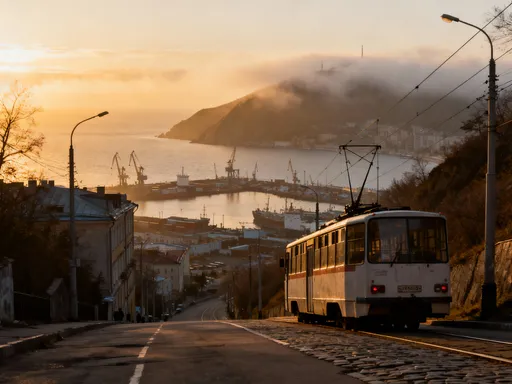
Vladivostok announces itself with drama. As the plane descends through layers of cloud, the city emerges like a theatrical set built on steep, forested slopes descending into the shimmering waters of the Golden Horn Bay. Cranes rise from the port like steel sentinels, trolleybuses cling to narrow roads that twist through the hills, and the vast expanse of the Pacific Ocean stretches beyond, calm and endless. For travelers accustomed to the baroque elegance of Moscow or the imperial grace of St. Petersburg, Vladivostok feels like another world entirely—cooler in climate, quieter in tone, yet pulsing with a different kind of energy. This is a city shaped by geography, by isolation, and by its role as Russia’s easternmost outpost, a bridge between continents and cultures.
The journey from Vladivostok International Airport to the city center sets the tone. The 45-minute drive unfolds through winding coastal roads, offering panoramic glimpses of bays, bridges, and distant islands. Unlike the dense urban sprawl of western Russian cities, Vladivostok feels spacious and open, its buildings clustered along ridges and nestled in coves. The city’s topography is both a challenge and a charm—steep hills mean that walking requires stamina, but they also reward with breathtaking views at every turn. Public transportation, including reliable trolleybuses and marshrutkas (minibuses), connects key districts, while taxis offer a convenient option for those unfamiliar with the terrain.
What strikes visitors immediately is the blend of military history and maritime vitality. Vladivostok has long served as the home port of the Russian Pacific Fleet, and naval presence remains visible in the form of docked vessels, guarded gates, and monuments to seafaring heroes. Yet this is not a closed or forbidding city. Since the 1990s, it has gradually opened to tourism and international exchange, especially with neighboring China, South Korea, and Japan. The city’s proximity to these nations has infused it with a subtle Asian influence—seen in signage, cuisine, and the rhythm of daily commerce. It is both remote and connected, isolated and cosmopolitan in its own understated way.
First sights often include the iconic Russky Bridge in the distance, spanning the Eastern Bosphorus with graceful modernity, and the golden dome of the Holy Trinity Cathedral, a symbol of spiritual resilience amid changing times. These landmarks frame the city’s identity: forward-looking yet rooted, maritime yet mountainous, Russian yet touched by the East. For the traveler, arrival in Vladivostok is not just a geographic shift—it is a psychological one, a transition to the edge of a vast and often overlooked region.
The Golden Horn: Heartbeat of the City and Urban Revival
The Golden Horn Bay is the soul of Vladivostok, a deep natural harbor that has long served as the city’s economic and emotional core. Once dominated by shipyards and restricted military zones, the waterfront has undergone a remarkable transformation in the past decade. Today, it stands as a symbol of urban renewal—a place where locals gather not just to pass through, but to linger, connect, and celebrate their city. Wide promenades now line the shore, shaded by trees and dotted with benches, sculptures, and open-air cafes. Families stroll in the evenings, couples sip tea overlooking the water, and fishermen cast their lines from concrete piers, undisturbed by the gentle flow of pedestrian life.
This revitalization was no small feat. For decades, the bay’s potential was locked behind industrial barriers and bureaucratic restrictions. But following Vladivostok’s selection as the host of the 2012 APEC summit, significant investment flowed into infrastructure and public spaces. The embankment was redesigned with accessibility and aesthetics in mind, blending modern materials with nods to historical architecture. The result is a harmonious balance—contemporary enough to feel fresh, traditional enough to feel authentic. Streetlights echo Soviet-era designs, while information panels in Russian and English tell the story of the bay’s evolution from military zone to civic treasure.
One of the most rewarding experiences is ascending Eagle’s Nest Hill, a short but steep climb from the waterfront. At the top, a viewing platform offers one of the most iconic panoramas in the Russian Far East. Below, the Golden Horn curves like a crescent, framed by hills thick with pine and spruce. The Russky Bridge stretches across the sea in the distance, and ferries glide silently across the water like moving postcards. On clear days, the view extends for miles, a testament to the city’s dramatic setting. It is a place that invites stillness, reflection, and a deep appreciation for the interplay of nature and human endeavor.
For visitors, a morning spent along the Golden Horn is time well invested. Begin with coffee at one of the bay-side cafes, where locally roasted beans are served with views of moored yachts and passing boats. Then, walk through the adjacent park, where children play under watchful parents and elderly couples sit on benches reading newspapers. Midday might bring a visit to the nearby Maritime Museum, which traces the region’s naval history, or a quiet moment at the Monument to the Fighters for Soviet Power in the Far East, a solemn tribute to revolution and resilience. The area is not just scenic—it is deeply social, a living space where the city breathes and belongs to its people.
Russky Island: Escape to Sea and Modern Ambition
Just a 30-minute drive over the soaring Russky Bridge lies Russky Island, a place of striking contrasts and quiet beauty. Once a restricted military zone, the island was transformed for the 2012 APEC summit, which brought with it a modern campus for the Far Eastern Federal University, research centers, and new infrastructure. Yet despite its high-tech developments, Russky Island retains a wild, untouched character. Forests reclaim old military roads, seabirds circle above rocky coves, and the air carries the crisp scent of ocean and pine. It is a place where the future and the natural world coexist, sometimes uneasily, but always with a sense of possibility.
The island offers some of the most accessible outdoor experiences near Vladivostok. Well-marked trails wind through mixed coniferous forests, leading to scenic overlooks and secluded beaches. One popular route begins near the university campus and descends to Aquarium Bay, where a small public beach invites swimming in summer and contemplative walks year-round. Another trail leads to the ruins of old coastal defense batteries, their concrete bunkers slowly being swallowed by moss and ivy. These remnants of the Cold War era stand as silent witnesses to a tense past, now repurposed as points of historical interest and photographic beauty.
Visitors can reach Russky Island by car or, seasonally, by ferry from the central pier. Driving offers the full experience of the Russky Bridge—the longest cable-stayed bridge in the world when completed—its twin towers rising 320 meters above the sea, cables fanning like a harp in the wind. The crossing itself is an event, a moment of awe as the city falls away behind and the open sea stretches ahead. Once on the island, rental bikes and electric shuttles help visitors navigate the hilly terrain, though walking remains the most rewarding way to absorb the landscape.
Seasonal changes bring different charms. In spring, wildflowers bloom along the trails; in summer, the island buzzes with university events and outdoor concerts; autumn turns the forests into a tapestry of gold and crimson; and winter cloaks everything in silence and snow, broken only by the tracks of hikers and the distant cry of gulls. For those seeking solitude, the northern and eastern shores offer quiet coves and unspoiled nature, far from the academic hub. Russky Island is not just a destination—it is a reminder that progress and preservation can walk hand in hand, when guided by vision and respect.
The Soul in the Streets: Markets, Monuments, and Local Life
Beyond its scenic vistas and historic sites, Vladivostok’s true character unfolds in its everyday rhythms. Nowhere is this more evident than in the Central Market, a bustling hall filled with the sights, sounds, and scents of Far Eastern life. Here, vendors display glistening fish hauled fresh from the Sea of Japan—cod, pollock, octopus, and the prized king crab. Jars of Korean-style kimchi stand beside baskets of wild mushrooms foraged from nearby forests. Spices, herbs, and dried seafood fill the air with a complex aroma that is both pungent and inviting. This is not a market staged for tourists; it is a vital hub where locals shop, bargain, and exchange news over cups of strong tea.
The city’s streets tell a similar story of cultural fusion. Architecture reflects a blend of Russian pragmatism, Soviet monumentality, and subtle Asian influences. Orthodox churches with golden domes stand blocks away from buildings with curved eaves reminiscent of Chinese design. Street signs appear in Cyrillic and sometimes in Chinese characters, a nod to the city’s cross-border connections. Locals dress with practicality and modesty—warm coats in winter, light layers in summer—yet there is a quiet pride in appearance, especially among older generations who maintain traditions of neatness and decorum.
Monuments and public art further reveal the city’s layered identity. The statue of Admiral G.I. Nevelskoy, who explored the Amur River in the 19th century, stands prominently near the waterfront, a symbol of maritime exploration. Nearby, Soviet-era mosaics depict workers, sailors, and scientists, celebrating collective effort and national pride. These images are not relics of a forgotten past but living parts of the city’s memory, respected even as new narratives emerge. Children climb on the base of statues, couples take photos in front of murals, and elders pause to read inscriptions with quiet recognition.
Food is another window into local life. Vladivostok’s cuisine is a testament to its geography and history. Seafood dominates, often prepared simply—steamed, grilled, or pickled—to highlight freshness. Pelmeni (dumplings) and borscht remain staples, but they share space on menus with Korean pancakes, Chinese-style stir-fries, and Japanese-inspired sushi made with local fish. Family-run restaurants, often tucked into residential buildings, serve hearty meals at modest prices. Dining here is not about spectacle but sustenance and connection—a shared table, warm bread, and conversation that lingers long after the plates are cleared.
Seasonal Magic: When to Visit and What Each Time of Year Reveals
Vladivostok is a city of seasons, each bringing its own mood and beauty. The choice of when to visit depends on what kind of experience one seeks—whether it’s vibrant energy, natural spectacle, or quiet contemplation. Spring, from April to early June, is a time of renewal. Cherry blossoms bloom near the Far Eastern Federal University, their delicate pink flowers contrasting with the dark green pines. Temperatures rise gradually, and the city sheds its winter stillness. This is an ideal time for walking, photography, and enjoying outdoor cafes as daylight extends.
Summer, from July to August, is the peak season. Warm days—averaging 20–25°C (68–77°F)—draw locals and visitors alike to the beaches, parks, and festivals. The city hosts cultural events, including music performances and food fairs, often held along the Golden Horn embankment. Russky Island comes alive with university activities and open-air gatherings. While this is the busiest time, the influx of people adds to the city’s vitality. Swimming is possible in sheltered bays, though the water remains cool even in midsummer.
Autumn, from September to October, may be the most visually stunning season. The hillsides transform into a mosaic of gold, amber, and crimson as deciduous trees shed their leaves. The air is crisp, the skies often clear, and the light takes on a soft, golden quality ideal for photography. Crowds thin, making it easier to explore museums, parks, and neighborhoods at a leisurely pace. It is a season of reflection and beauty, perfect for travelers who appreciate quiet moments and natural artistry.
Winter, from November to March, brings snow, cold, and a different kind of stillness. Temperatures can drop to -15°C (5°F), and ice often forms along the harbor. Yet winter has its own charm. Snow-covered streets and frosted pine trees create a postcard-like scene. The city lights twinkle against the early darkness, and indoor spaces—museums, theaters, and cozy cafes—become inviting sanctuaries. For those who enjoy winter walks and the serenity of a snow-covered landscape, Vladivostok in winter offers a peaceful, almost meditative experience. The holiday season, especially New Year’s, is celebrated with lights, decorations, and family gatherings, adding warmth to the cold months.
Getting Around: Navigation Made Simple Despite the Hills
Navigating Vladivostok requires some adaptation, especially for those unaccustomed to hilly terrain. The city’s layout—spread across ridges and valleys—means that distances can be deceptive. A short visual distance may involve a steep climb or a long detour. However, the public transportation system is efficient and well-established, making independent travel entirely feasible. Trolleybuses and buses cover most major routes, with clear signage in Cyrillic and increasingly in English. Marshrutkas, privately operated minibuses, offer flexible routes and frequent departures, though they require attention to stops and payment methods.
For ease of use, many locals and visitors rely on mobile apps such as Yandex.Maps and Citymapper, which provide real-time transit information, walking directions, and route planning. Tickets can be purchased at kiosks or via contactless cards, and transfers between lines are generally straightforward. Taxis, available through apps like Yandex.Go, are affordable and reliable, often more convenient for reaching destinations not well-served by public transit. Walking is rewarding but should be planned with elevation in mind—comfortable shoes are essential, and pacing is key.
One useful strategy is to organize visits by district. The city center, centered around the Golden Horn, contains many attractions within walking distance. Russky Island and more remote areas are best visited by car or organized tour. The Vladivostok Cable Car, while primarily a tourist attraction, also serves as a practical link between different elevations, offering both transportation and panoramic views. With a little planning, the city’s topography becomes not a barrier but a feature—an invitation to move slowly, observe closely, and appreciate the unfolding landscape.
Beyond the City: Day Trips to Coastal Villages and Nature Reserves
Just beyond Vladivostok’s borders lie landscapes of pristine beauty and quiet wonder. Day trips to nearby coastal villages and nature reserves offer a chance to experience the region’s wilder side. Cape Pushchin, located about 30 kilometers south, is a favorite among locals for its rocky shores, clear waters, and forest trails. It is an ideal spot for hiking, birdwatching, and swimming in summer. The area is well-maintained but not overcrowded, with picnic areas and basic facilities.
Lazurnaya Bay, another accessible destination, features a sandy beach framed by hills and pine forests. In summer, families gather here for barbecues and swimming, while in spring and autumn, the bay is nearly deserted, perfect for solitude and nature immersion. The drive or bus ride to these locations is scenic, passing through coastal villages where life moves at a slower pace. Houses with brightly painted shutters, vegetable gardens, and small docks hint at a simpler, more rooted way of living.
For those interested in conservation, the Far Eastern Nature Reserve offers guided excursions into protected ecosystems. These trips emphasize eco-awareness and low-impact tourism, with trained guides explaining local flora and fauna, including rare bird species and marine life. Visitors are encouraged to leave no trace, respect wildlife, and support local communities through responsible travel practices. These excursions are not just about sightseeing—they are about connection, understanding, and stewardship.
Such journeys deepen the appreciation for Vladivostok not just as a city, but as a gateway to a larger, wilder region. They remind travelers that beauty often lies beyond the obvious, in the quiet coves, forest paths, and village lanes that exist just off the main road. These experiences stay with visitors long after they return home, not as snapshots, but as memories of peace, clarity, and natural harmony.
Conclusion: Why Vladivostok Stays With You
Vladivostok does not dazzle at first glance. It does not compete with the grandeur of St. Petersburg or the energy of Moscow. Instead, it reveals itself slowly, like a story told in whispers rather than shouts. Its power lies in contrast—in the meeting of sea and mountain, of history and modernity, of solitude and connection. It is a city that rewards patience, curiosity, and a willingness to look beyond the surface.
For the traveler, especially one seeking depth and authenticity, Vladivostok offers a rare gift: the chance to stand at the edge of a vast continent and feel both small and significant. It is a place where the past is honored, the present is lived with quiet dignity, and the future is approached with cautious hope. From the golden light on the harbor to the silence of a snow-covered trail, from the bustle of the market to the stillness of a hilltop temple, Vladivostok lingers in the heart because it feels real.
It is not a city that tries to be everything to everyone. It is simply itself—proud, resilient, and quietly beautiful. And for those who take the time to listen, to walk its streets, and to breathe its sea-scented air, it becomes not just a destination, but a memory etched in the soul.