How I Finally Made Strength Training Stick — Simple Moves That Actually Work
You don’t need hours at the gym or fancy equipment to build real strength. I used to think strength training was for athletes or fitness fanatics — until I tried a simpler approach that fit my daily life. Small changes, consistent effort, and movements that felt natural made all the difference. This isn’t about extreme routines or quick fixes. It’s about building lasting strength in a way that works for real bodies and real schedules. Let’s break down how anyone can start — and actually stick with it.
The Strength Training Myth That Held Me Back
For years, I avoided strength training because I believed it was only for people who lived at the gym. I imagined clanging weights, bulging muscles, and complicated workout charts that required expert knowledge. The idea of lifting heavy made me worry I’d look too bulky or, worse, hurt myself. These misconceptions weren’t unique to me — many women, especially those in their 30s to 50s, carry similar assumptions. The truth is, strength training isn’t about transforming into a bodybuilder. It’s about empowering your body to move with confidence, stability, and resilience.
What held me back most was the belief that effective workouts had to be intense. I thought if I wasn’t drenched in sweat or sore for days, I wasn’t doing enough. But sustainability matters more than intensity. Pushing too hard too soon often leads to burnout or injury, especially when starting from a sedentary lifestyle. The real shift came when I reframed strength training as a form of self-care rather than performance. It’s not about how much weight I can lift, but how well I can carry groceries, play with my kids, or get up from the floor without struggling.
Fear of failure also played a role. I worried about doing exercises wrong or not measuring up. But every expert agrees: everyone starts somewhere. Proper form matters more than the number of reps. And progress isn’t linear. Some days feel stronger than others — and that’s normal. Once I accepted that strength is a practice, not a performance, the pressure lifted. I stopped comparing myself to fitness influencers and started listening to my own body. That mental shift was the first real step toward consistency.
Why Your Body Actually Craves Strength Work
Strength training isn’t just beneficial — it’s biologically essential. As we age, our muscle mass naturally declines, starting as early as our 30s. This process, called sarcopenia, accelerates after 50 and can lead to weakness, poor balance, and increased risk of falls. But research consistently shows that regular resistance exercise can slow, and even reverse, this decline. Muscle isn’t just for appearance; it’s functional tissue that supports every movement you make, from standing up to climbing stairs.
One of the most overlooked benefits of strength training is its impact on posture and joint health. When core and back muscles are strong, they support the spine and reduce strain on the neck and shoulders — areas where many women carry tension from daily tasks like driving, cooking, or working at a desk. Strengthening these muscles helps maintain alignment, which in turn reduces discomfort and prevents long-term wear on joints. Think of your muscles as the body’s natural support system — like internal braces that keep everything in place.
Beyond structure, strength plays a key role in metabolism. Muscle tissue burns more calories at rest than fat does. This means that increasing lean muscle mass helps regulate body weight more efficiently, even when you’re not actively exercising. It’s not about extreme calorie burn during a workout — it’s about creating a body that functions better all day long. Women who engage in regular strength training often report more stable energy levels, fewer cravings, and better sleep — all linked to improved metabolic health.
Perhaps most importantly, strength training builds resilience against age-related decline. It improves bone density, reducing the risk of osteoporosis. It enhances balance and coordination, lowering the chance of falls. And it supports independence in later years — the ability to carry luggage, garden, or simply get out of a chair without help. These aren’t distant concerns; they’re part of a lifelong commitment to staying capable and confident in your own body.
The 3 No-Excuse Exercises I Do Every Week
After years of false starts, I found that sticking to just three foundational exercises made all the difference. They require no equipment, take less than 15 minutes, and can be done anywhere — at home, in a hotel room, or even during a break at work. These movements cover the major muscle groups and deliver real results when done consistently. They’re not flashy, but they’re effective. And best of all, they’re adaptable to any fitness level.
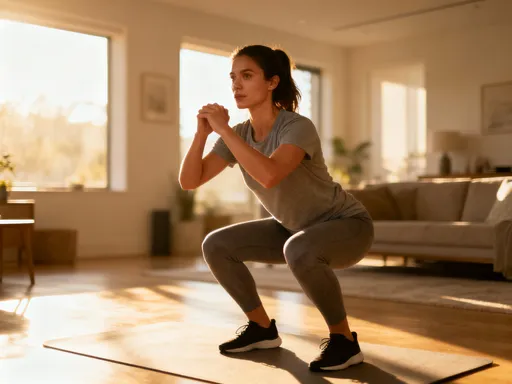
Bodyweight squats are my go-to for lower body strength. At first, I worried I wasn’t doing them right — leaning too far forward, knees caving in, or not going deep enough. But with a few simple cues, it became natural. I stand with feet shoulder-width apart, engage my core, and imagine sitting back into a chair. My weight stays in my heels, and I keep my chest lifted. I start with just 10 reps and build up over time. Now, I do them while waiting for the kettle to boil or before brushing my teeth. This movement strengthens the glutes, quads, and hamstrings — muscles we use every day for walking, climbing, and standing.
Push-ups, even modified ones, have transformed my upper body strength. I started on my knees, with hands slightly wider than shoulders, and focused on keeping my back straight. It felt challenging at first, but within weeks, I could do more reps with better control. Now, I alternate between knee push-ups and full push-ups depending on how I feel. This exercise builds the chest, shoulders, and triceps — crucial for lifting, reaching, and carrying. I no longer dread putting suitcases on overhead bins or lifting heavy bags from the car. The key is progression, not perfection.
Plank variations have been a game-changer for core stability. I began with a forearm plank on my knees, holding for just 15 seconds. Over time, I increased the duration and moved to a full plank. Now, I also try side planks to engage the obliques. The goal isn’t to hold it for minutes — it’s to maintain proper alignment without straining the lower back. A strong core doesn’t just improve posture; it protects the spine and makes everyday movements safer and more efficient. These three exercises — squats, push-ups, and planks — form a complete foundation. Together, they support full-body strength without requiring a single piece of equipment.
How to Start Without Overwhelm
The biggest obstacle to starting strength training isn’t lack of time — it’s mental resistance. We overthink, overplan, and set unrealistic expectations. The solution? Start so small it feels almost too easy. I adopted the “two-minute rule”: commit to just two minutes of movement each day. That might mean five squats, three push-ups, or a 30-second plank. The goal isn’t to complete a full workout — it’s to show up. Once I started, I often did more. But even on busy days, two minutes kept the habit alive.
Habit stacking has been another powerful tool. I pair strength exercises with existing routines — like doing squats after brushing my teeth or a quick plank while waiting for the microwave. These micro-sessions add up and reinforce consistency. Over time, the behavior becomes automatic, like putting on a seatbelt or locking the door. There’s no need for a special outfit or a dedicated space. The lower the barrier to entry, the more likely you are to stick with it.
Tracking progress doesn’t require a fitness app or a journal. I focus on consistency, not numbers. Did I do something today? That’s the only metric that matters in the beginning. I don’t count reps or time myself — I celebrate showing up. This mindset shift reduces pressure and builds confidence. When you stop chasing perfection, you create space for real progress. And momentum builds naturally when you’re not constantly measuring yourself against an ideal.
Starting small also prevents injury. Rushing into intense workouts without proper form or recovery increases the risk of strain. By easing in, you give your body time to adapt. Muscles, tendons, and joints need time to strengthen. Patience isn’t passive — it’s strategic. The women who sustain strength training long-term aren’t the ones who start fast; they’re the ones who start smart and stay consistent.
Real Talk: What I Got Wrong (And Fixed)
I won’t pretend I got it right the first time. My biggest mistake was skipping rest days. I thought more was better — if two days a week helped, five must be even more effective. But within a month, I felt exhausted, sore, and unmotivated. My shoulders ached, and my energy dropped. I learned the hard way that muscles don’t grow during the workout — they grow during recovery. Without rest, the body can’t repair and strengthen. Now, I give myself at least one full rest day between strength sessions. I listen to my body: if I feel fatigued or unusually stiff, I take extra time to recover.
Another misstep was expecting fast results. I wanted to feel stronger in two weeks — to lift more, move easier, see visible changes. But strength builds gradually. It’s not like losing weight, where the scale might shift quickly. The gains are subtle: standing taller, lifting without strain, feeling more capable. I had to learn patience and trust the process. Progress isn’t always visible, but it’s felt. I now notice improvements in how I move through the day — not just during workouts.
I also used to ignore discomfort, pushing through pain because I thought it meant I was working hard. But pain is a signal, not a challenge. Sharp joint pain, lower back strain, or shoulder discomfort are signs to stop and reassess. I’ve since adjusted my form, reduced range of motion when needed, and incorporated more warm-ups and cooldowns. I pay attention to how my body responds — tightness is normal, but pain is not. This shift from pushing to listening has made my routine safer and more sustainable.
One of the most valuable lessons has been adapting to my body’s needs. Some days, I modify push-ups to the wall. Other days, I do shallow squats. Flexibility in approach prevents burnout and honors where I am physically. Fitness isn’t about rigid rules — it’s about responsive care. When I stopped treating strength training as a test and started seeing it as support, everything changed.
Making It Last: Building a Routine That Fits Your Life
Sustainability comes from integration, not isolation. A workout that doesn’t fit your life won’t last. I’ve learned to choose realistic times — usually in the morning before the household wakes up or during a midday break. I keep a yoga mat rolled up in the corner of the living room, where I can see it. That visual cue makes it easier to start. If I’m traveling, I do bodyweight exercises in my hotel room. If I’m tired, I do a shorter version. The goal is consistency, not perfection.
Flexibility is key. Life is unpredictable — kids get sick, work gets busy, energy fluctuates. On tough days, I scale back instead of skipping. Five squats still count. A 20-second plank still matters. This “something is better than nothing” approach keeps the habit alive. I’ve also used habit stacking to anchor strength work to daily routines — like doing a few reps while waiting for coffee to brew or after hanging up laundry.
Environmental cues play a bigger role than motivation. I leave my workout clothes out the night before, or set a gentle reminder on my phone. I’ve found that accountability helps, but not in a rigid way. I don’t post on social media or join competitive groups. Instead, I share my goals with a trusted friend — someone who checks in without judgment. This gentle support keeps me on track without pressure.
Over time, strength training has become less of a “workout” and more of a daily ritual — like brushing my teeth or drinking water. It’s not something I do to change my body; it’s something I do to care for it. And when it feels like care, not chore, it lasts.
Beyond the Workout: Strength as a Lifestyle Shift
The benefits of strength training extend far beyond the physical. I’ve noticed a quiet confidence in everyday tasks — opening jars, carrying laundry baskets, getting up from the floor. These small victories add up. I feel more capable, less fragile. That sense of empowerment spills into other areas of life — decision-making, problem-solving, even how I carry myself in conversations.
Improved sleep has been another unexpected benefit. Regular movement helps regulate circadian rhythms, and strength training in particular can reduce nighttime restlessness. I fall asleep faster and wake up feeling more refreshed. Mental clarity has improved too — I think more clearly, stay focused longer, and handle stress with greater resilience. Exercise isn’t a cure-all, but it’s a powerful tool for overall well-being.
I’ve also become more active in natural ways. I take the stairs more often, walk farther, garden longer. Strength training hasn’t made me obsessed with exercise — it’s made me enjoy movement again. I no longer see physical effort as a burden. Instead, I see it as a sign of vitality. And that mindset shift has transformed how I live.
Most importantly, I now view strength as a lifelong support system. It’s not a goal to reach and abandon. It’s a practice that evolves with me — through seasons of busyness, fatigue, travel, and change. It’s not about looking a certain way. It’s about feeling strong, capable, and resilient. The strongest version of me isn’t defined by how much I can lift — it’s defined by how well I can live.
Strength training doesn’t have to be intimidating or time-consuming. When simplified and personalized, it becomes one of the most practical investments in long-term well-being. It’s not about perfection — it’s about showing up consistently, honoring your body’s pace, and building resilience that lasts. The strongest version of you isn’t built in a month; it’s shaped by small, smart choices repeated over time. Start where you are, use what you have, and let real strength grow naturally.